
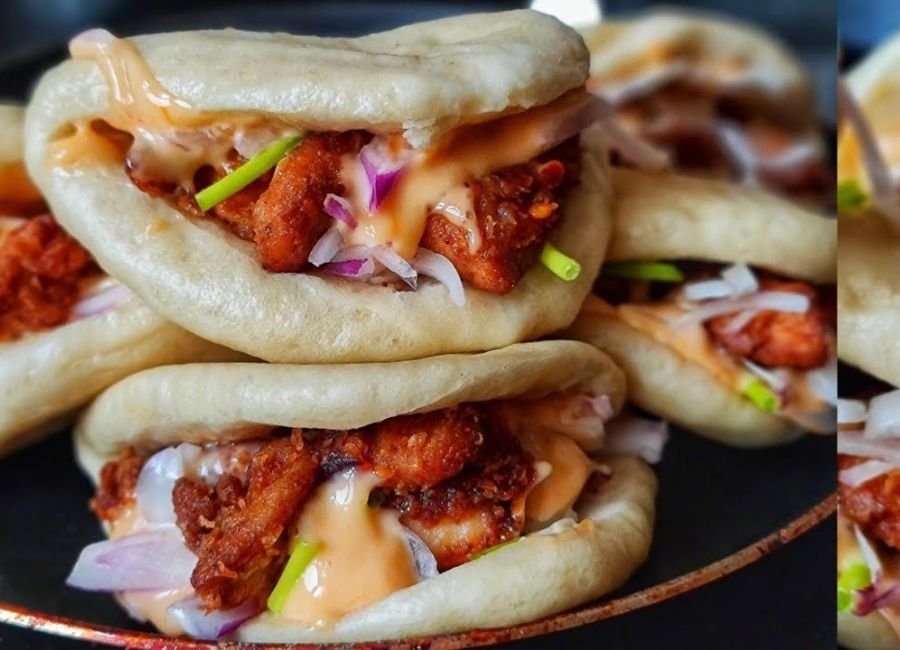
Chicken Bao has traveled a long way from the street markets of Taiwan and the dim sum houses of Hong Kong to become one of the most recognizable dishes in modern Asian street food culture. You will find it at rooftop restaurants in London, food trucks in New York, and bustling night markets across Southeast Asia. The reason is simple: it is one of those rare dishes that is simultaneously humble and deeply satisfying.
What makes homemade chicken bao special is control. You decide the filling, the seasoning, and exactly how soft the yeast dough should be. This guide walks you through every stage from mixing the bao dough to nailing the steaming technique so your first batch comes out right.
What Makes Chicken Bao So Special?
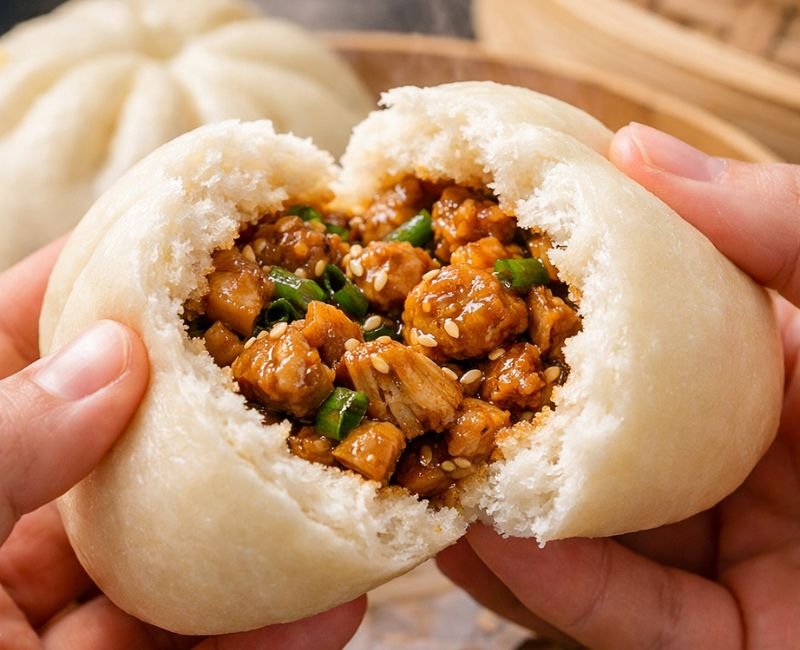
The magic of a good bao bun is its texture. The exterior is smooth, almost porcelain-white, and the interior is open-crumbed, soft, and just slightly springy. It is nothing like bread or naan it is lighter, more delicate, with a gentle sweetness that comes from the slow fermentation of the yeast dough.
Steaming, rather than baking, is what gives bao that signature pillowy quality. The moist heat cooks the dough evenly without drying it out, keeping every bite tender. Paired with a richly seasoned savory chicken filling, it creates a balance that is hard to walk away from.
Chicken Bao Filling: Ingredients and Method
A great filling is the soul of any chicken bao. The goal here is bold flavor, a glossy sauce, and just enough texture so every bite has substance.
Ingredients
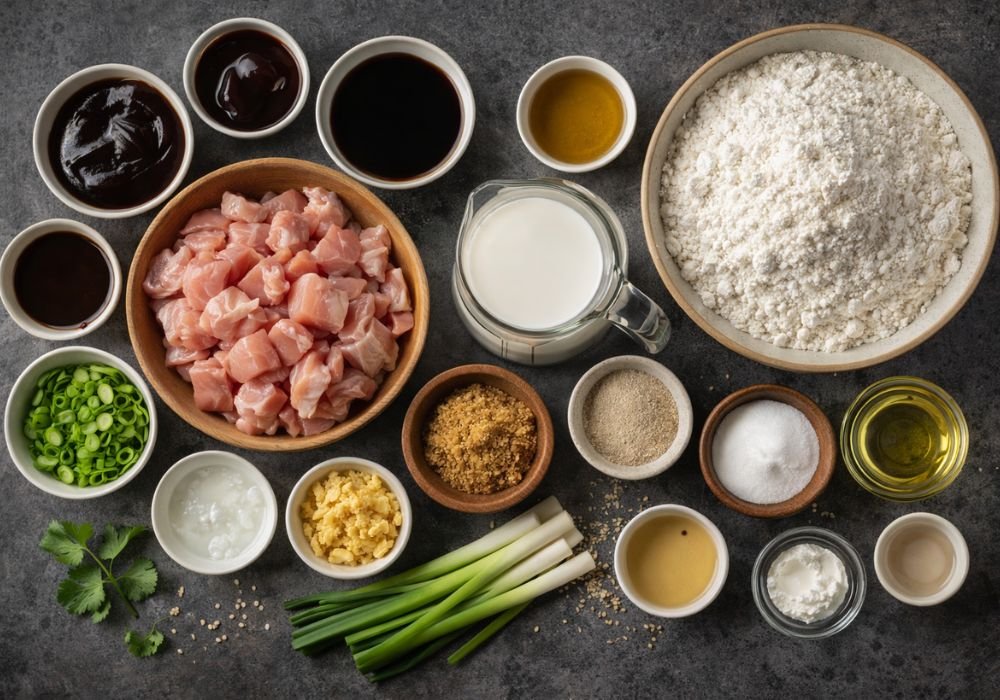
For the filling
- 500g boneless chicken thighs, diced
- 3 tbsp hoisin sauce
- 2 tbsp soy sauce
- 1 tbsp oyster sauce
- 1 tbsp sesame oil
- 1 tsp fresh ginger, grated
- 3 cloves garlic, minced
- 1 tbsp brown sugar
- 1 tbsp cornstarch + 2 tbsp cold water
- 2 spring onions, finely sliced
For the bao dough
- 300g all-purpose flour
- 1½ tsp instant yeast
- 2 tbsp caster sugar
- ½ tsp salt
- 150ml warm milk (38–42°C)
- 2 tbsp neutral oil
- 1 tsp baking powder
- 1 tbsp rice vinegar (optional, for whiteness)
Step-by-Step Chicken Bao Filling Method
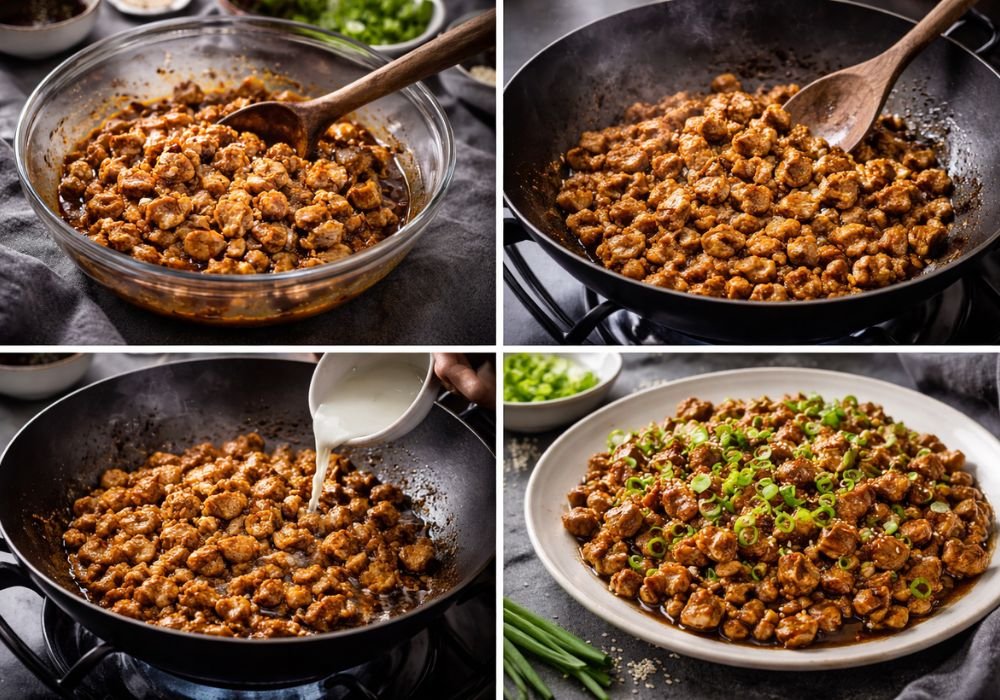
- Cut chicken thighs into small 1 cm cubes. Thighs stay juicier than breast meat after steaming this matters.
- In a bowl, combine hoisin sauce, soy sauce, oyster sauce, sesame oil, ginger, garlic, and brown sugar. Toss the chicken through and marinate for at least 30 minutes.
- Heat a wok or heavy pan over high heat. Add the marinated chicken and cook for 5–6 minutes until the liquid reduces and coats the meat.
- Pour in the cornstarch slurry and stir for 1–2 minutes until the sauce turns thick and glossy.
- Fold in spring onions and spread the filling on a plate to cool completely before assembling buns. Warm filling softens dough and causes tearing at the seal.
How to Make Chicken Bao Dough from Scratch
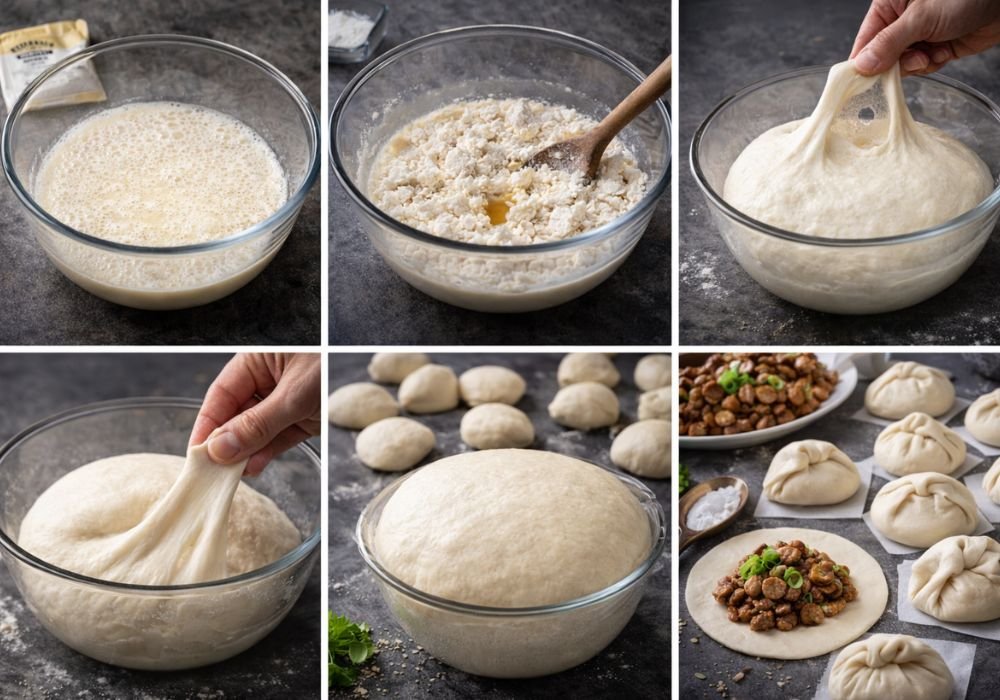
Fluffy bao starts with a properly developed yeast dough. The process is straightforward, but each stage serves a purpose skip none of them.
- Combine warm milk, yeast, and sugar. Let it sit for 10 minutes until foamy. No foam means dead yeast start over with a fresh packet.
- Whisk flour, salt, and baking powder in a large bowl. Add the yeast mixture and oil, then mix into a shaggy dough.
- Knead by hand for 8–10 minutes until the dough is smooth, soft, and only slightly tacky. Test readiness with the windowpane test: stretch a small piece it should hold a thin, translucent membrane without tearing.
- Place dough in a lightly oiled bowl, cover with plastic wrap, and leave in a warm spot for 1–1.5 hours until doubled in size. A turned-off oven with just the light on works perfectly.
- Punch the dough down, fold in the baking powder, and let it rest uncovered for 10 minutes. This gives the buns their extra lift.
- Divide into 12–14 equal portions. Roll each into a disc of roughly 10 cm, keeping the edges thinner than the center to allow for even sealing.
- Place a generous spoonful of filling on one side, fold, and pleat the edges to seal tightly. Rest each finished bun on a small square of parchment paper.

Chicken Bao Steaming Techniques and Mistakes to Avoid
Steaming is where most home cooks go wrong. The bao are already shaped and proofed beautifully, and then an avoidable mistake undoes the effort. Pay close attention here.
The right way to steam
- A bamboo steamer is the best tool the wood absorbs excess moisture so condensation never drips back onto the buns, which causes surface blemishes.
- Leave at least 4–5 cm of space between each bao they will expand significantly during steaming.
- Always lower the buns into a steamer with water that is already at a rolling boil, never cold water.
- Steam over medium-high heat for 12–14 minutes without lifting the lid.
- After the timer goes off, wait 5 minutes before opening the lid. Sudden exposure to cool air causes the buns to wrinkle and collapse.
Common mistakes to avoid
- Over-proofing the dough: buns become flat and dense when the yeast has over-fermented.
- Watery filling: liquid filling breaks through the dough during steaming. Make sure the sauce is thick before filling.
- Using a bare metal steamer without a cloth lining: condensation drips ruin the surface. Always line with cloth or parchment.
- Repeatedly lifting the lid to check: each peek releases steam and disrupts the cooking environment.
Best Chicken Bao Variations Worth Trying
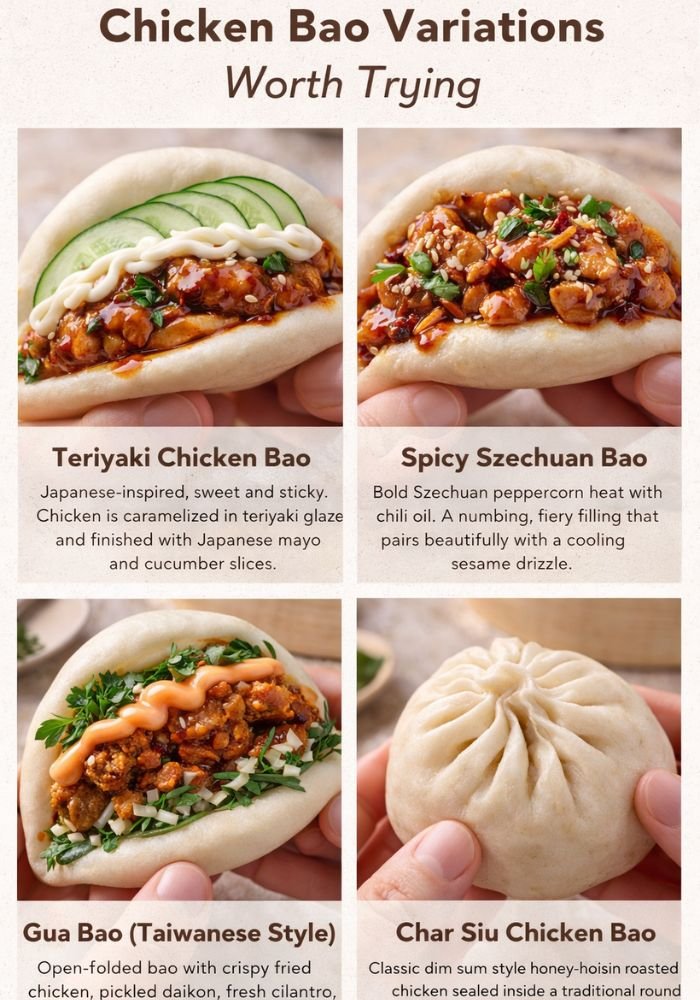
Teriyaki Chicken Bao
Japanese-inspired, sweet and sticky. Chicken is caramelized in teriyaki glaze and finished with Japanese mayo and cucumber slices.
Spicy Szechuan Bao
Bold Szechuan peppercorn heat with chili oil. A numbing, fiery filling that pairs beautifully with a cooling sesame drizzle.
Gua Bao (Taiwanese Style)
Open-folded bao with crispy fried chicken, pickled daikon, fresh cilantro, and a stripe of sriracha mayo across the top.
Char Siu Chicken Bao
Classic dim sum style honey-hoisin roasted chicken sealed inside a traditional round bao with a pinched top.
Serving Suggestions for Chicken Bao
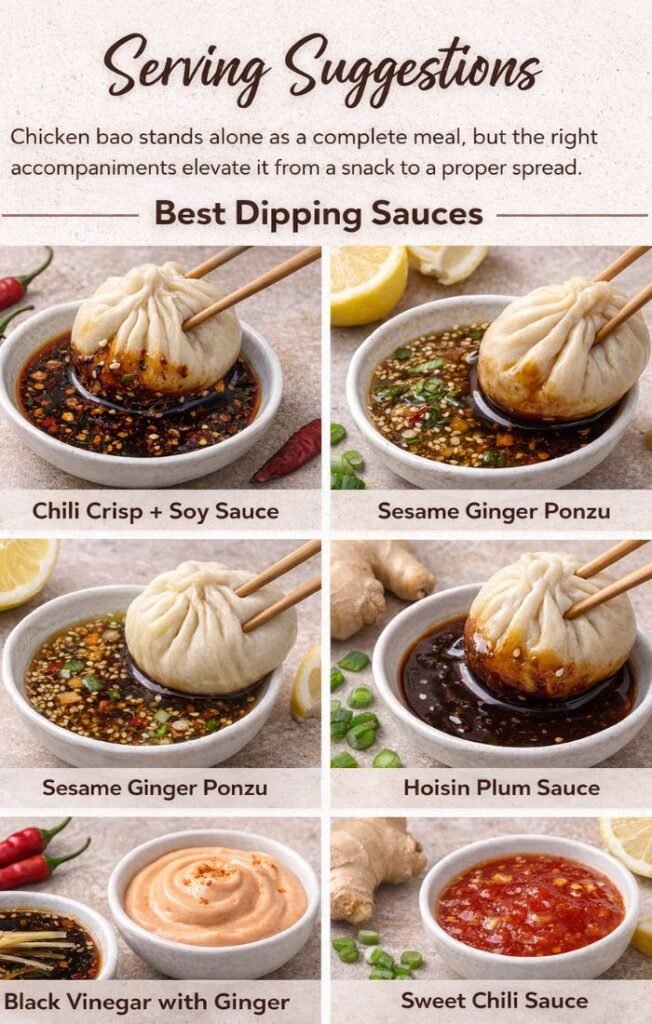
Chicken bao stands alone as a complete meal, but the right accompaniments elevate it from a snack to a proper spread.
Best dipping sauces
Chili crisp + soy sauce
Sesame ginger ponzu
Hoisin plum sauce
Sriracha mayo
Black vinegar with ginger
Sweet chili sauce
Side dishes that work
- Quick-pickled cucumber or daikon the acidity cuts through the richness of the filling perfectly.
- Asian slaw with sesame oil and rice vinegar adds crunch and brightness to the plate.
- Edamame with sea salt a light, protein-rich addition that keeps things simple.
- Miso soup a warm bowl alongside the bao makes the meal feel complete and intentional.
FAQs
1. What is chicken bao made of?
Chicken bao is made with soft steamed buns filled with seasoned chicken and savory sauces.
2. Why are my bao buns not fluffy?
Bao buns turn dense due to under-kneading, expired yeast, or improper proofing.
3. Can I make chicken bao without a bamboo steamer?
Yes, you can use a metal steamer lined with cloth to prevent condensation.
4. How long should I steam bao buns?
Bao buns should be steamed for about 12–14 minutes on medium-high heat.
5. Can I freeze chicken bao?
Yes, cooked chicken bao can be frozen and reheated by steaming again.
Conclusion
Chicken bao is a perfect mix of soft, fluffy dough and rich, flavorful filling that you can easily make at home with the right technique. From kneading the dough to steaming the buns, each step helps you achieve that light and airy texture.
The best part is its versatility you can customize flavors, sauces, and spice levels to match your taste. With a little practice, you can create delicious, restaurant-style chicken bao that looks and tastes amazing.
