
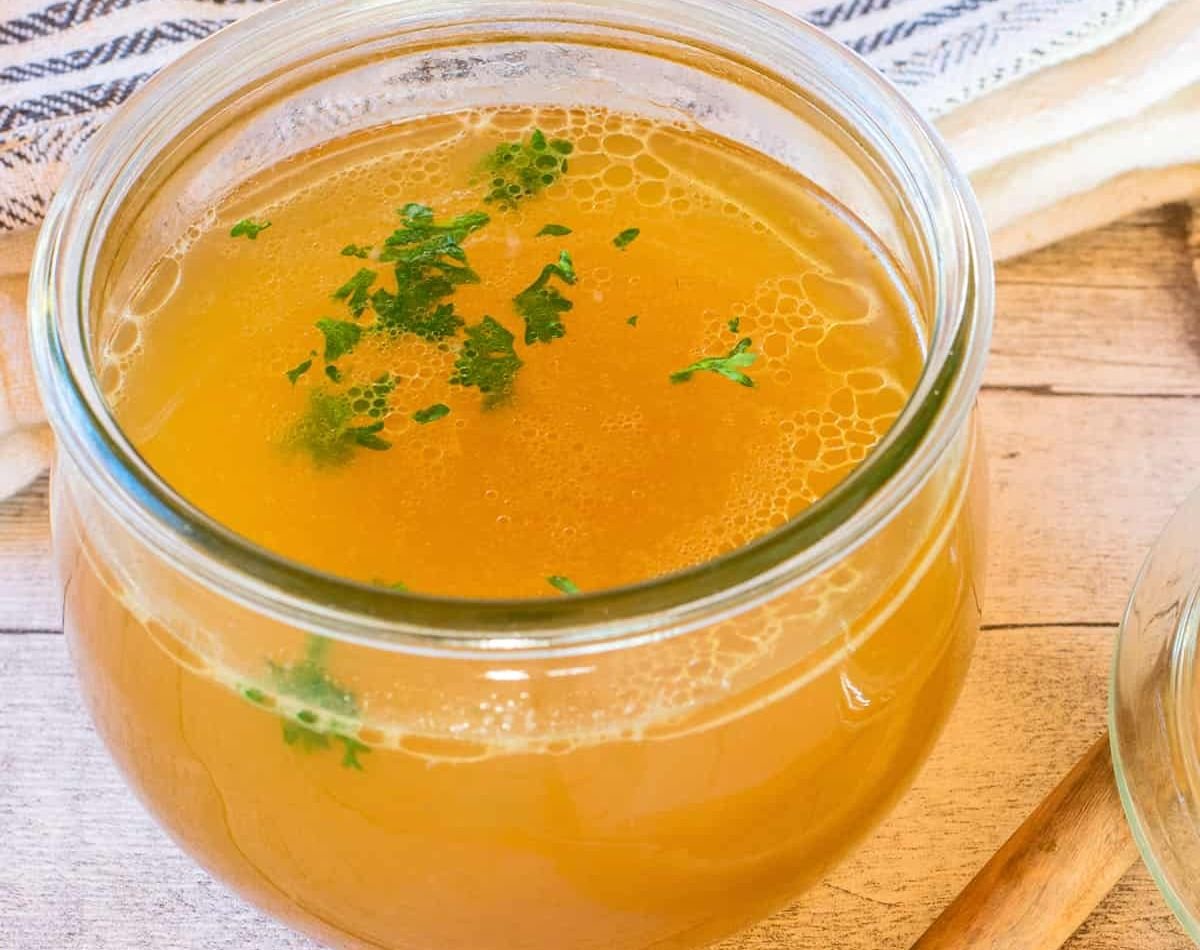
If you’ve only ever used store-bought, this chicken broth recipe will change everything. Homemade chicken broth recipe is deeper in flavor, cleaner in ingredients, and surprisingly easy to make. You control what goes in the pot no preservatives, no mystery sodium levels, no thin, watery result. Just pure, golden, deeply savory broth that elevates every dish you add it to.
This guide covers everything: what ingredients actually do, step-by-step instructions for three cooking methods, the science behind getting a crystal-clear broth, how to store it properly, and answers to the most common questions home cooks ask.
Why This Chicken Broth Recipe Beats Store-Bought Every Time
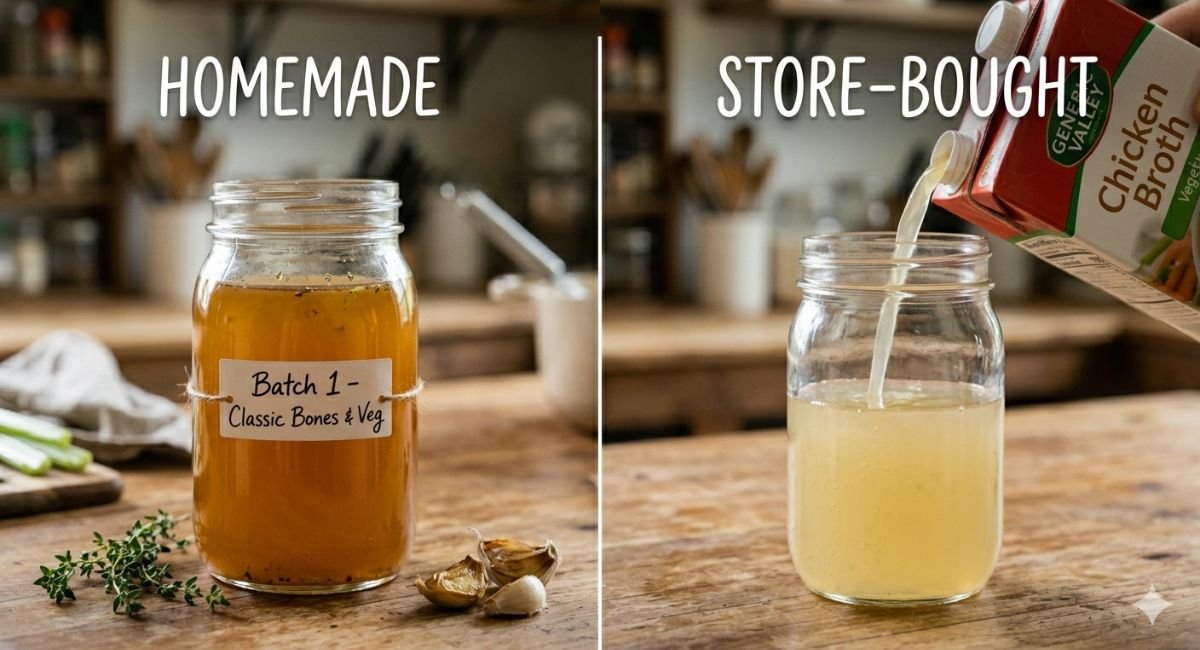
Walk into any grocery store and you’ll find a wall of boxed and canned chicken broth. It’s convenient, sure. But taste one next to a properly madehomemade stock and the difference is immediate.
Flavor: Store-bought broth is made in bulk and pasteurized. That process kills a lot of the nuance. Homemade broth, made with real bones and aromatics, has a body and richness that comes from gelatin something you rarely get from a carton.
Health: When you make your own, you know exactly what’s in it. No added MSG, minimal sodium, no natural flavors (which can mean almost anything). If you’re after bone broth benefits collagen, minerals, gut-supportive gelatin making it from scratch is the only real way to get them.
Cost: A whole chicken carcass, a few vegetables, and water costs next to nothing. You can use scraps you’d otherwise throw away: onion skins, celery tops, carrot peels. The return on investment is remarkable.
Chicken Broth Recipe Ingredients Deep Dive: What Goes In and Why
A great chicken broth recipe isn’t complicated, but understanding each ingredient helps you make better decisions especially when you’re improvising with what’s in your fridge.
The Bones
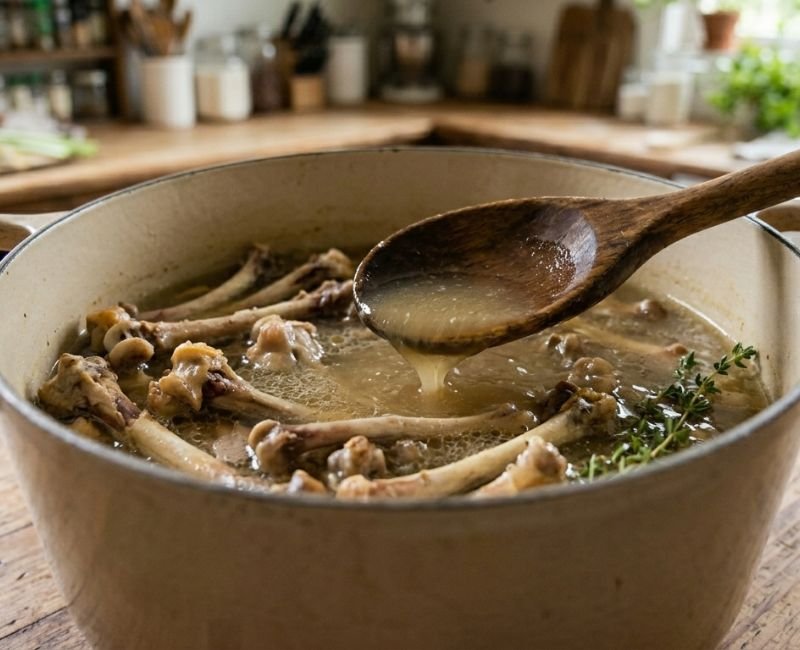
This is the foundation. Bones release collagen as they cook, which dissolves into gelatin. That gelatin is what gives a good broth its silky texture and body the kind that actually coats a spoon. Without it, you just have hot water with chicken flavor.
Best bones to use:
- Chicken carcass (leftover from a roast chicken this is the gold standard)
- Chicken backs and necks (cheap, high in cartilage and collagen)
- Chicken feet (if you can find them extremely high in gelatin)
- Drumsticks or wings (a good middle ground)
A mix is better than any single cut. Cartilage-heavy pieces like necks and feet give you that signature body. Meatier pieces add flavor.
Mirepoix: The Aromatic Base
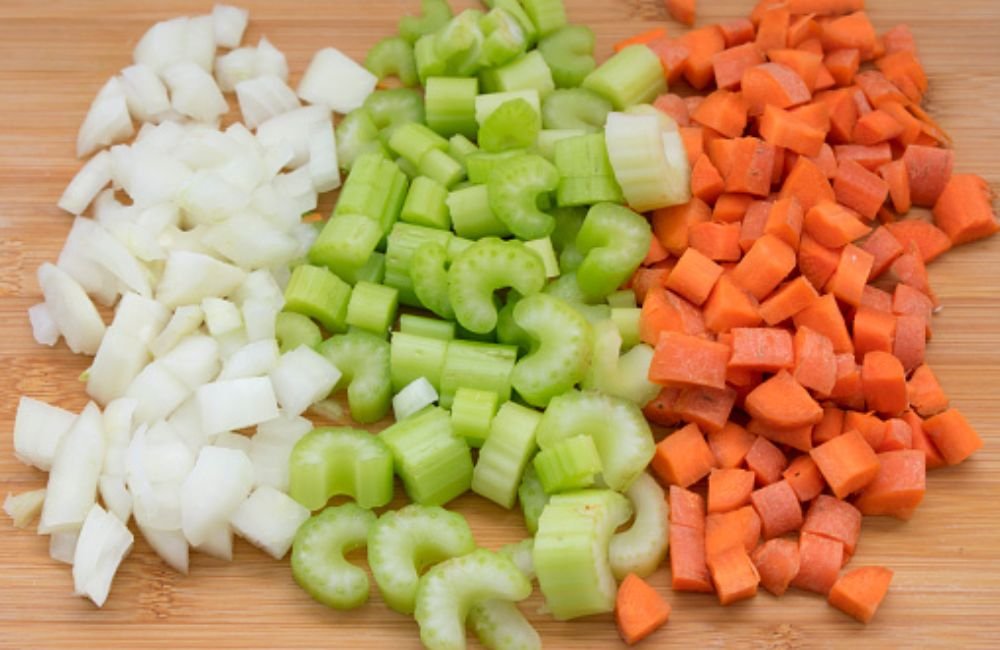
Mirepoix a French term for the classic combination of onion, carrot, and celery is the backbone of almost every Western stock and broth. Here’s what each one does:
- Onion: Adds a savory, slightly sweet depth. Don’t bother peeling it. The skin adds color.
- Carrot: Brings mild sweetness and a golden hue. Cut into rough chunks no need to peel.
- Celery: Herbal, slightly bitter notes that balance the richness. Include the leafy tops.
The standard ratio is 2 parts onion to 1 part each carrot and celery. So for a large pot, use 2 onions, 2 carrots, and 2 stalks of celery.
Herbs and Aromatics
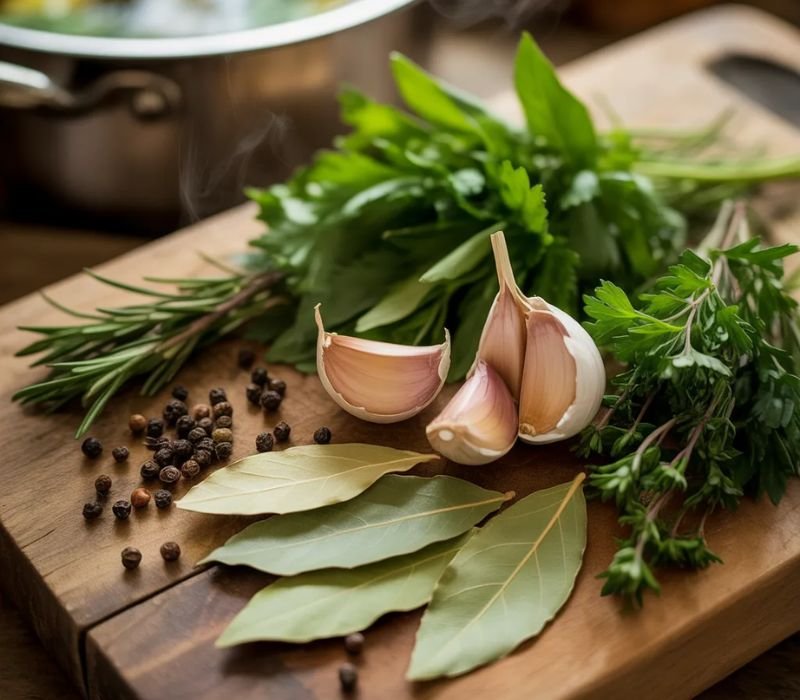
These are your supporting cast:
- Bay leaves (2–3): Subtle, earthy depth. Don’t skip them.
- Black peppercorns (8–10): Add complexity without turning it spicy.
- Fresh parsley (a small handful): Bright, fresh finish.
- Thyme (2–3 sprigs): Classic pairing with chicken.
- Garlic (3–4 cloves, smashed): Optional but adds a pleasant savory note.
One thing to avoid: heavy spices like cumin, coriander, or paprika. They’ll overpower and make the broth taste like something specific rather than a versatile base.
Water
Use cold water. Starting cold actually helps pull more gelatin and flavor from the bones before the liquid reaches a simmer. Roughly 3–4 quarts for a standard batch.
Step-by-Step Chicken Broth Recipe: Three Cooking Methods

Stovetop Chicken Broth Recipe (Classic Method)
This stovetop chicken broth recipe gives the deepest flavor. This is the traditional method. Longer cook time, but excellent control and the best flavor development.
What you need:
- 2–3 lbs chicken bones or a whole carcass
- 2 onions, quartered
- 2 carrots, roughly chopped
- 2 celery stalks, roughly chopped
- 3 garlic cloves, smashed
- 2 bay leaves
- 8 peppercorns
- Small handful of fresh parsley
- 3–4 sprigs fresh thyme
- 4 quarts cold water
Instructions:
- Optional roasting step: For a richer, more golden broth, spread bones on a baking sheet and roast at 425°F (220°C) for 20–25 minutes until lightly browned. Skip this if you’re using a leftover roast chicken carcass it’s already got color.
- Place bones in a large stockpot. Cover with 4 quarts of cold water.
- Bring to a gentle boil over medium-high heat. As it heats up, you’ll see gray foam and scum rising to the surface. Skim this off with a ladle or spoon. This step is important for a clean-tasting, clear broth.
- Once most of the foam is gone (usually 10–15 minutes), reduce heat to low. Add all vegetables, herbs, and peppercorns.
- Simmer uncovered or with the lid slightly ajar for 3 to 4 hours. Don’t let it boil hard (see the science section below).
- Taste around the 3-hour mark. The broth should taste rich and well-rounded.
- Strain through a fine-mesh strainer into a large bowl or container. Discard solids.
- Let cool slightly, then refrigerate. Skim off the fat layer once it solidifies on top or leave it for extra richness.
Instant Pot Chicken Broth Recipe for Quick Flavor
This Instant Pot chicken broth recipe saves time. The Instant Pot dramatically cuts down cook time without sacrificing much flavor. It’s the weeknight-friendly version.
Instructions:
- Add all ingredients to the Instant Pot. Don’t fill past the max line about 3 quarts of water works for a 6-quart pot.
- Lock the lid. Set the steam release valve to “Sealing.”
- Cook on High Pressure for 60 minutes.
- Let the pressure release naturally for at least 30 minutes before switching to a quick release. Natural release helps keep the broth clear and lets the bones continue releasing gelatin.
- Carefully open the lid (steam will still escape). Strain the broth through a fine-mesh strainer.
- Let cool and refrigerate. Skim fat before using.
Tip: Pressure cooking can make the broth slightly cloudier than stovetop, but the flavor is just as good. If clarity matters, strain through cheesecloth.
Slow Cooker Chicken Broth Recipe for Hands-Off Cooking
This slow cooker chicken broth recipe is perfect for busy days. Set it and forget it. Perfect for overnight cooking or busy days. The slow cooker produces an incredibly gentle, clean broth.
Instructions:
- Add all ingredients to your slow cooker. Cover with cold water up to 1 inch below the max fill line.
- Set to Low and cook for 10 to 12 hours (or overnight).
- Don’t cook on High it can cause a rolling boil inside the slow cooker, leading to cloudy broth and a slightly flat flavor.
- Strain, cool, and store as above.
The Science Behind a Clear Chicken Broth Recipe
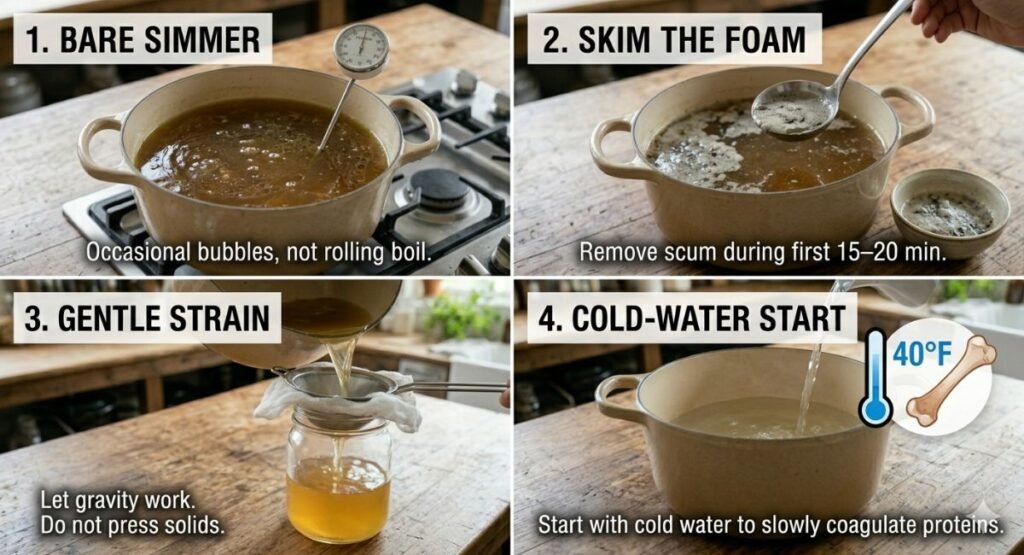
A cloudy broth isn’t unsafe to eat. But a clear, amber broth looks beautiful, tastes cleaner, and is generally a sign that it was made with care.
Here’s what causes cloudiness and how to prevent it:
1. Boiling too hard. This is the number one culprit. A vigorous boil agitates the proteins and fat and emulsifies them into the liquid, turning it milky. The fix is simple: keep it at a bare simmer. You want to see the occasional bubble break the surface, not a rolling boil.
2. Not skimming the foam. The gray scum that forms in the first 15–20 minutes is coagulated protein from the bones. If you stir it back in instead of removing it, it clouds the broth and can add an off flavor. Skim it diligently in the early stage.
3. Rushing the strain. Pressing down on the solids when you strain forces fine particles through the strainer. Pour gently and let gravity do the work.
4. Skipping the cold-water start. Starting with cold water lets the proteins coagulate slowly and float to the surface as foam easier to skim. Hot water causes them to disperse immediately.
Bonus fix for already-cloudy broth: An egg white raft (a classical French clarification technique) works wonders. Whisk 2 egg whites into the slightly cooled broth, slowly bring it up to a simmer, and the egg whites will attract and trap the cloudy particles. Strain through cheesecloth and you’ll have a beautifully clear consommé-style broth.
How to Store Your Chicken Broth Recipe: Fridge, Freezer, and More
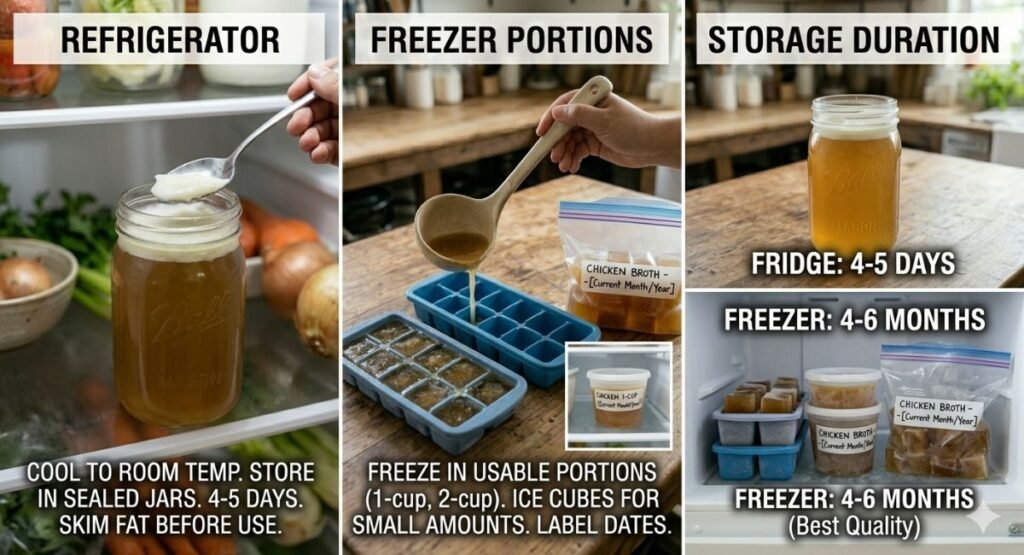
You can store this chicken broth recipe easily in the fridge or freezer. One of the best things about homemade broth is how well it keeps if you store it right.
Refrigerator
- Let the broth cool to room temperature first. Don’t put a hot pot straight in the fridge it raises the internal temperature and can affect other foods.
- Transfer to sealed glass jars or airtight containers.
- Shelf life: 4 to 5 days in the refrigerator.
- A layer of fat will solidify on top. This actually acts as a natural seal and helps preserve the broth longer. Skim it off before using, or stir it in if you want more richness.
Freezer
- Shelf life: 4 to 6 months at its best quality. It’s still safe beyond that, but the flavor may fade.
- Freeze in portions you’ll actually use: 1-cup and 2-cup amounts are practical for most recipes.
- Leave at least half an inch of headspace in containers or jars broth expands as it freezes.
- Ice cube trays work brilliantly for small amounts. Freeze, then transfer the cubes to a zip-lock bag. Each cube is roughly 2 tablespoonsperfect for deglazing a pan or finishing a sauce.
- Label everything with the date. Frozen broth all looks the same after a month.
Chicken Broth Recipe FAQ: Common Questions Answered
1. What is chicken broth?
Chicken broth is a flavorful liquid made by simmering chicken bones, meat, and vegetables in water.
2. How long should I cook chicken broth?
For best results, simmer chicken broth on the stovetop for 3–4 hours or use a slow cooker for 10–12 hours.
3. Why is my chicken broth cloudy?
Cloudiness happens when the broth is boiled too hard or the foam is not skimmed during cooking.
4. Can I freeze homemade chicken broth?
Yes, chicken broth can be frozen for up to 6 months in airtight containers or ice cube trays.
5. Why does chicken broth turn gelatinous in the fridge?
A jelly-like texture means the broth is rich in collagen extracted from the bones, which is a sign of good quality.
Conclusion
This chicken broth recipe is simple, healthy, and worth making at home. With just a few basic ingredients and your choice of stovetop, pressure cooker, or slow cooker, you can create a rich, clean, and deeply flavorful broth that’s far better than anything store-bought. It not only improves the taste of your dishes but also gives you full control over what goes into your food.
On top of that, it’s budget-friendly and reduces kitchen waste by using leftover bones and vegetable scraps. With proper storage, one batch can last for days or even months, making it a practical staple in any kitchen. Once you get used to making it, homemade broth becomes an easy and rewarding part of your routine.
