
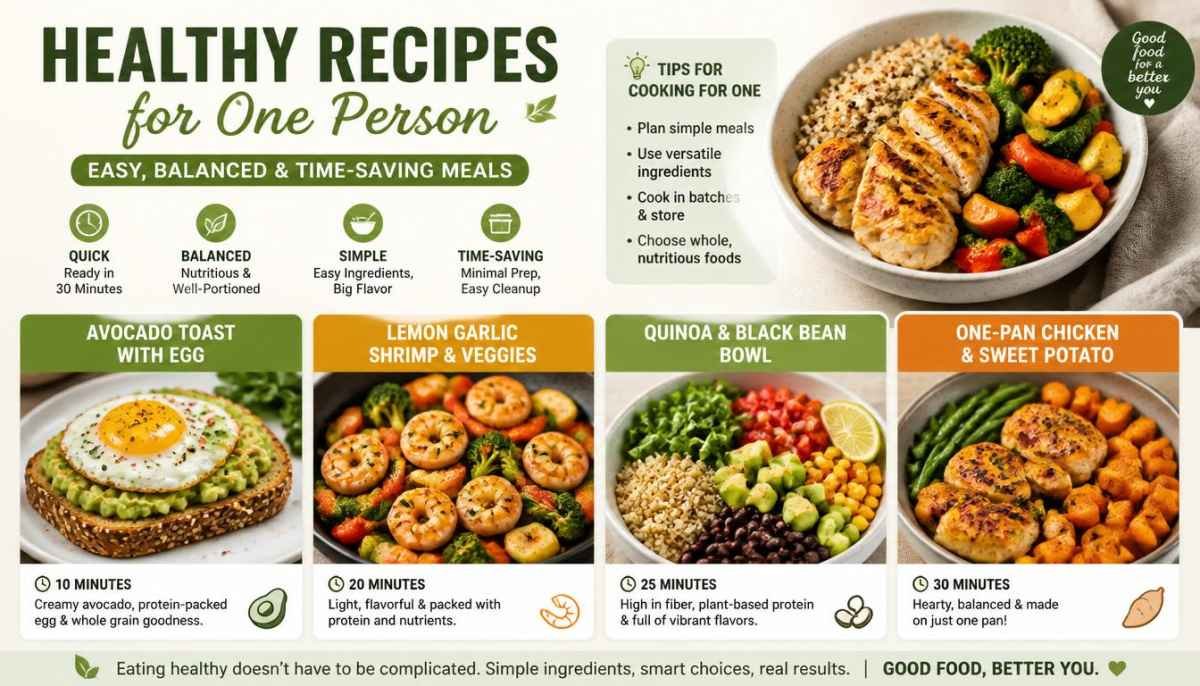
Cooking for one person is often misunderstood as difficult or boring, but in reality it can be one of the most practical and healthy ways to manage daily food habits. When you cook only for yourself, you gain full control over ingredients, nutrition, and portion size, which naturally leads to better health decisions.
Many people living alone whether students, workers, or independent individuals often rely on fast food or skipped meals, which affects energy levels and long-term wellness. Simple home cooking solves this problem by offering fresh, balanced, and cost-effective meals without unnecessary complexity.
Why Healthy One-Person Meals Are Important in Daily Life
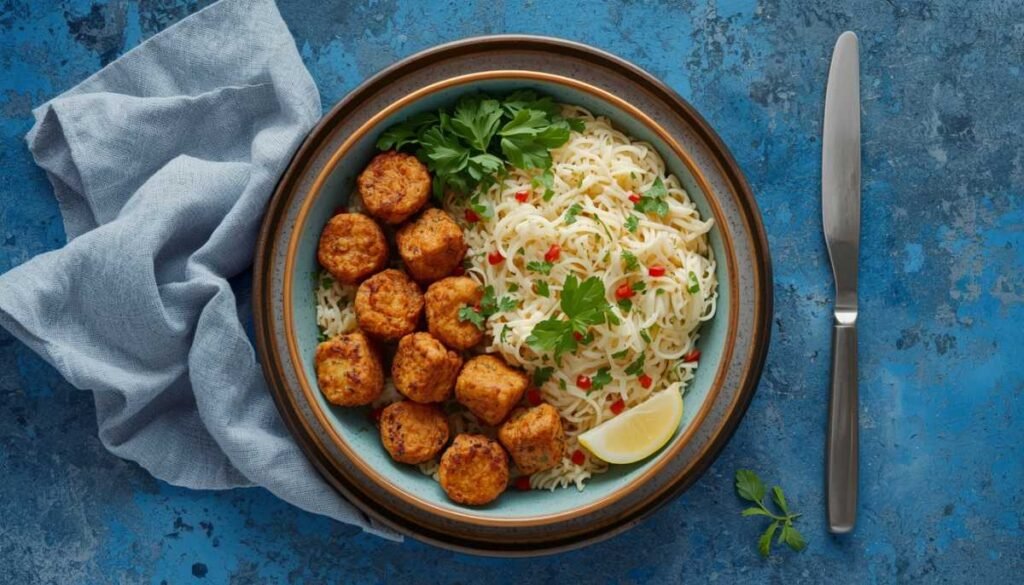
Healthy meals for one person are not just about eating food, they are about building a stable lifestyle routine. When meals are planned properly, it reduces dependency on processed or outside food, which often contains excess oil, sugar, or preservatives. Cooking for yourself also helps in controlling calorie intake naturally without strict dieting methods.
This habit also leads to better money management because you only purchase what is truly required, which naturally lowers food waste and avoids unnecessary expenses. Over time, it helps improve both physical well-being and mental discipline, creating a more structured, balanced, and organized daily routine.
Easy Healthy Breakfast Recipes for One Person
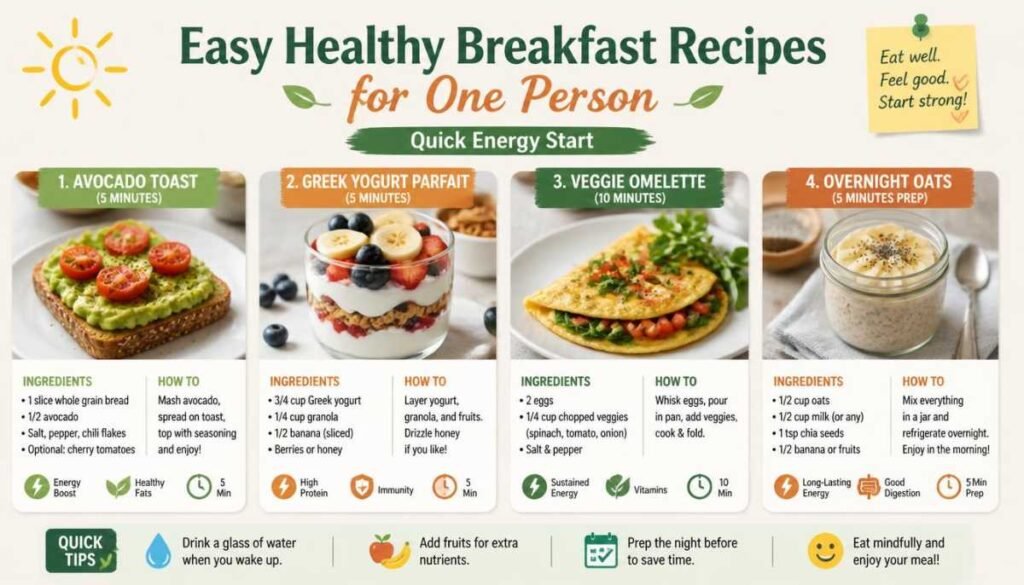
Breakfast plays an important role in setting the tone for the entire day, and for one person, it should be quick yet nutritious. One of the easiest options is oats mixed with fruits and a small amount of nuts, which provides fiber and long-lasting energy without heavy cooking.
Another simple choice is egg toast with vegetables, where eggs provide protein and vegetables add essential nutrients, making it a complete small meal. Smoothies made from milk or yogurt with fruits are also a fast option for busy mornings when time is limited but nutrition is still important.
Simple Lunch Ideas That Are Healthy, Filling & Easy to Prepare
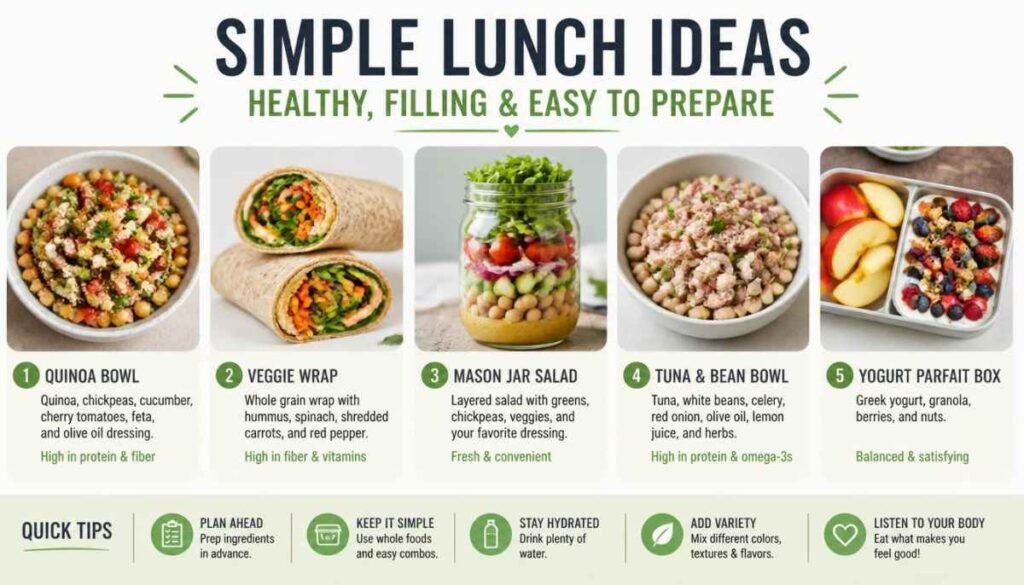
Lunch for one person should be balanced enough to keep energy stable throughout the day without feeling heavy or sluggish. A rice bowl with vegetables and protein like chicken or lentils is one of the most practical options because it is flexible and easy to prepare in small portions.
Lentil soup is another strong choice, especially for those who prefer light but nutritious meals that are easy to digest. Vegetable stir-fry with a small portion of rice or bread also works well for people who want something quick yet satisfying without complicated cooking steps.
Meal Ideas Overview Table (One Person Healthy Plan)
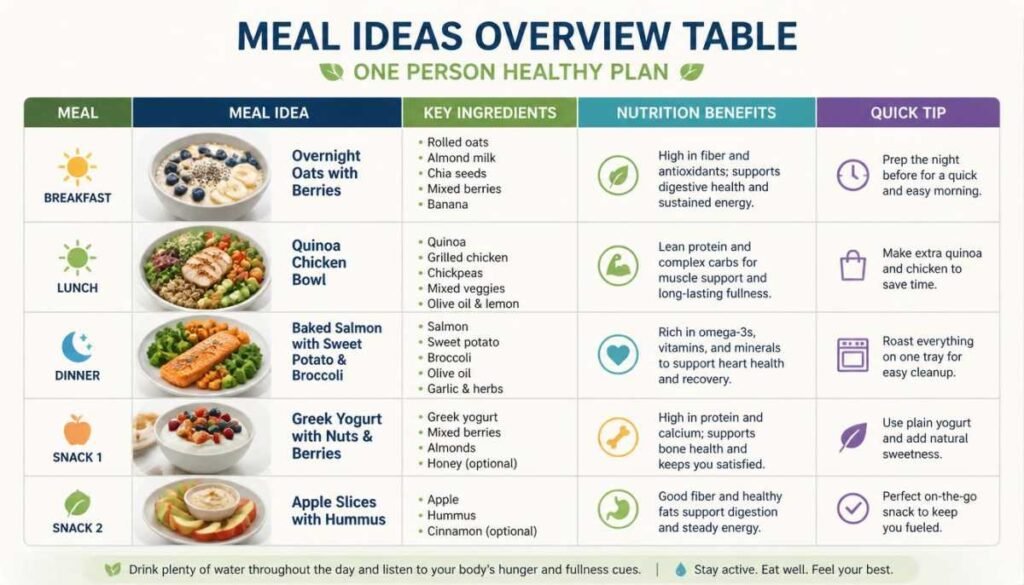
| Meal Time | Recipe Idea | Key Benefit | Preparation Time |
| Breakfast | Oats with fruits & nuts | Energy + fiber | 5–10 minutes |
| Breakfast | Egg toast with vegetables | Protein boost | 10 minutes |
| Lunch | Rice bowl with chicken/veg | Balanced nutrition | 15–20 minutes |
| Lunch | Lentil soup (dal) | Easy digestion | 20 minutes |
| Dinner | Salad or light wrap | Low calorie & light | 10–15 minutes |
Light & Healthy Dinner Options for Better Sleep & Digestion
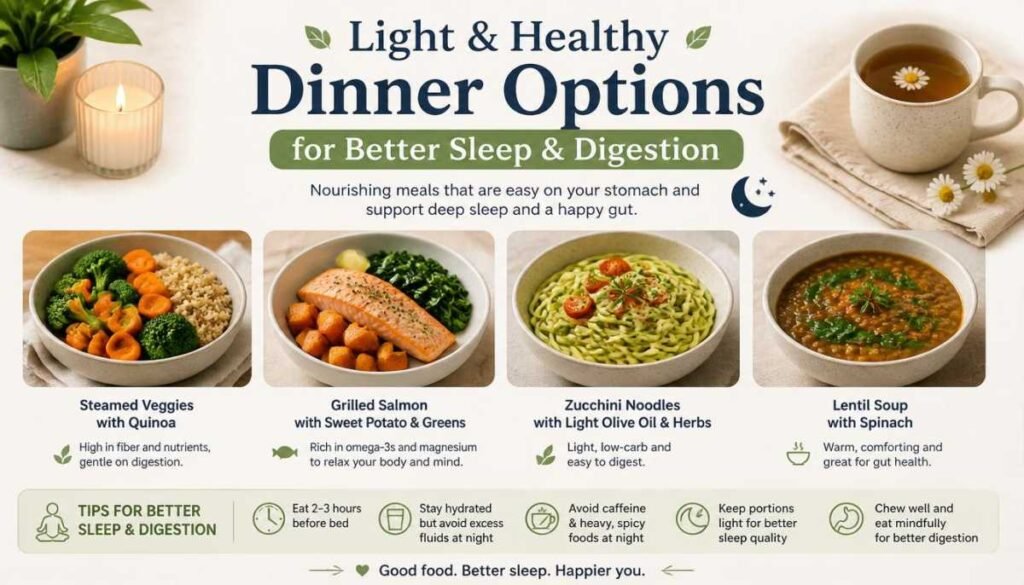
Dinner for one person should ideally be lighter than other meals because it has a direct impact on sleep quality and digestion. A simple vegetable salad made with fresh ingredients such as cucumber, tomato, and a drizzle of olive oil is a refreshing choice that supports clean and healthy eating habits without feeling heavy on the stomach.
Another quick and easy option is a wrap or sandwich filled with eggs, fresh vegetables, or grilled chicken. It requires minimal preparation and still provides enough nutrition to keep you satisfied. The main idea is to keep dinner simple, light, and easy to digest so the body can relax properly and recover during the night.
Smart Cooking Tips for One Person to Save Time & Reduce Waste
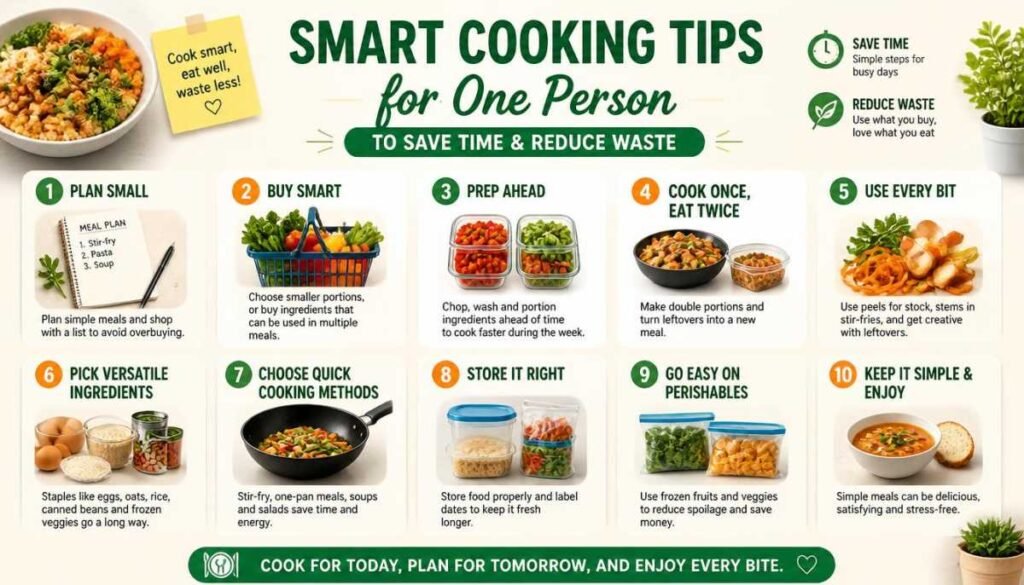
Cooking for one becomes much easier when a few smart habits are followed consistently. Planning meals in advance helps avoid confusion and reduces the chances of ordering outside food.
Using simple ingredients across multiple meals also saves money and storage space. It is better to cook fresh food in small portions instead of storing large leftovers, which often lose freshness. Keeping recipes simple with fewer steps ensures that cooking remains a stress-free daily activity rather than a burden.
Conclusion Simple Habits Lead to a Healthier Solo Lifestyle
Healthy cooking for one person is not about complexity, it is about consistency and smart choices. When meals are planned with balance and simplicity, it becomes easier to maintain both health and lifestyle discipline.
Even with a busy schedule, small home-cooked meals can create a big difference in energy, focus, and overall well-being. The key is to stay consistent, avoid unnecessary processed food, and keep your diet simple yet nutritious.
FAQs – Healthy Recipes for One Person
Q1: What are the easiest healthy recipes for one person at home?
The easiest healthy recipes include oats with fruits, egg toast with vegetables, lentil soup, and simple rice bowls with vegetables or chicken. These meals are quick to prepare, require fewer ingredients, and provide balanced nutrition without much effort.
Q2: How can I cook healthy meals for just one person without wasting food?
The best way is to plan meals in advance and use ingredients that can be reused in different recipes. Cooking in small portions, storing ingredients properly, and choosing simple recipes helps reduce waste and keeps food fresh.
Q3: Is it expensive to eat healthy when living alone?
No, it is not expensive if meals are planned properly. Cooking at home for one person actually saves money compared to eating outside. Buying basic ingredients like rice, eggs, vegetables, and lentils makes healthy eating budget-friendly.
