

Picture this: it’s a cold Sunday afternoon, and your kitchen smells absolutely incredible. A big pot is bubbling away on the stove, golden liquid shimmering with herbs and slow-simmered goodness. That’s the kind of magic a homemade chicken stock recipe brings into your home. And honestly? It’s far easier than most people think.
If you’ve ever cooked a whole chicken and tossed the carcass without a second thought, you’ve been leaving restaurant-quality flavor right in the trash. This guide is going to change that. Whether you’re a beginner just learning your way around the kitchen or someone who cooks every day, this chicken stock recipe is your new secret weapon — the one that makes everything from a simple bowl of ramen to a creamy risotto taste like it came from a five-star restaurant.
What Exactly Is Chicken Stock and Why Should You Make It?
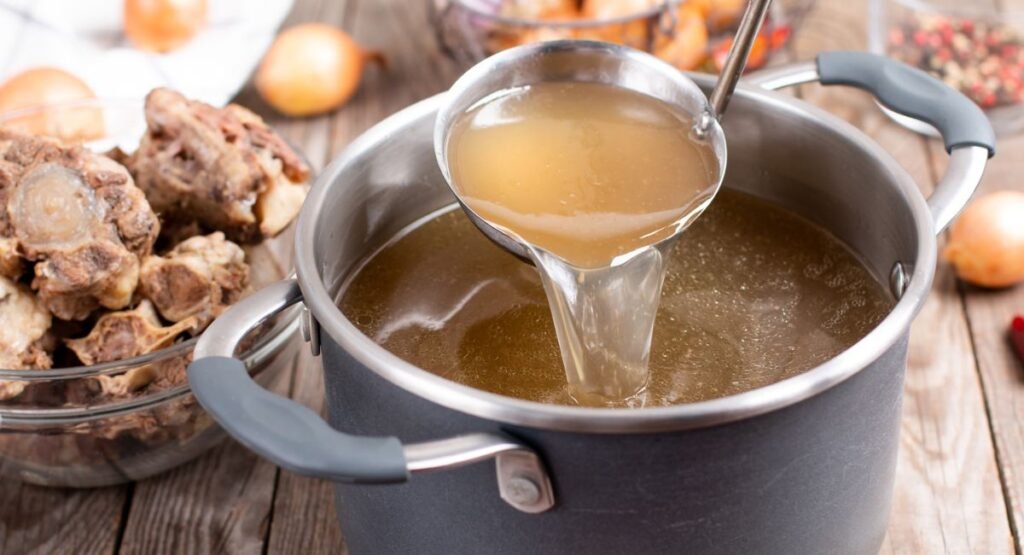
A lot of people use the terms ‘chicken stock’ and ‘chicken broth’ interchangeably, but there’s actually a difference worth knowing. Chicken broth is made primarily from meat, giving it a lighter, saltier flavor. Stock, on the other hand, is made from bones and sometimes meat which releases collagen as it simmers. That’s what gives a good chicken stock recipe its signature rich body and that gorgeous golden color.
Here’s the thing that surprises most people: a homemade healthy chicken stock recipe contains virtually no added sodium, no preservatives, and is naturally packed with minerals like calcium, magnesium, and phosphorus from the bones. Studies suggest that bone broths and stocks can support gut health and joint function, though the science is still evolving. Compare that to most store-bought cartons loaded with sodium and additives, and it’s a pretty easy choice.
The other thing to appreciate is just how economical it is. You’re essentially transforming bones, vegetable scraps, and a few herbs things that would otherwise go in the bin into something genuinely valuable. Think of it as cooking with zero waste and maximum flavor.
Ingredients You’ll Need for the Best Chicken Stock Recipe
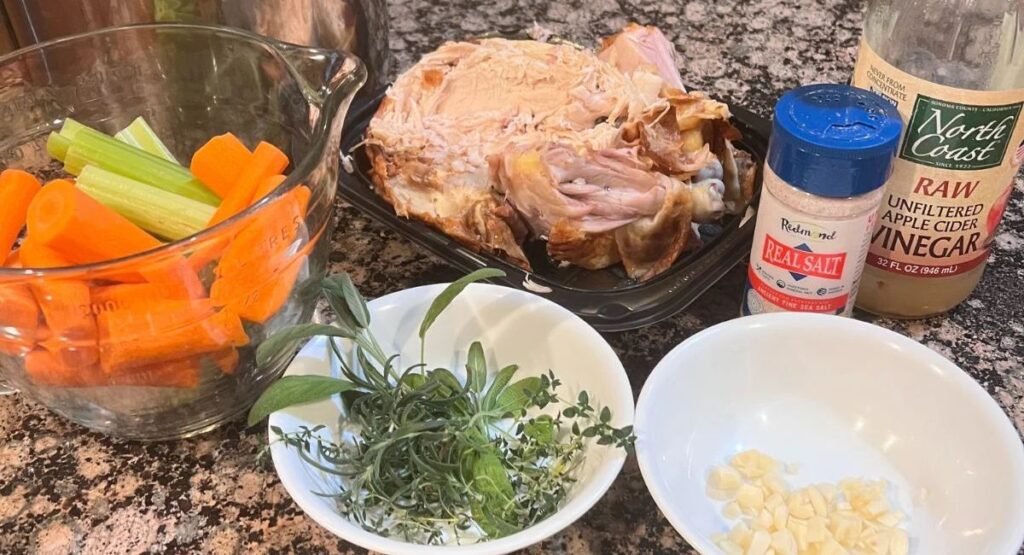
One of the beautiful things about a chicken stock recipe is that it’s forgiving. You don’t need exact measurements you need the right foundations. Here’s what goes into making a deeply flavorful stock at home.
The Core Ingredients
Start with about 2 to 3 pounds of chicken bones. A leftover roast chicken carcass works perfectly, but you can also ask your butcher for chicken backs, necks, or feet (yes, feet they’re collagen gold). If you’d prefer to use a whole chicken, go ahead; just know you’ll get a slightly lighter stock.
Next, grab two medium onions (quartered, skin and all the skin adds color), three carrots broken in half, three stalks of celery, a full head of garlic sliced crosswise, a small bunch of fresh parsley, two bay leaves, a teaspoon of whole black peppercorns, and a small splash of apple cider vinegar. That vinegar trick is something professional chefs swear by it helps draw the minerals out of the bones without making the stock taste sour at all.
You’ll also need about 12 to 14 cups of cold water, enough to cover everything by two to three inches.
How to Make Chicken Stock — Step by Step
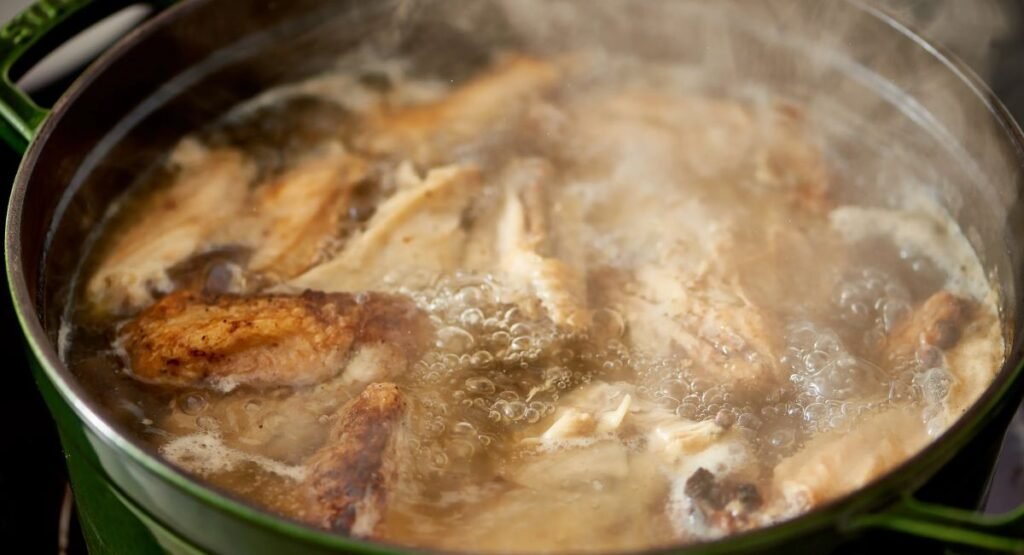
There’s no complicated technique here. What you’re doing is essentially slow cooking with water, and the key is patience. Let’s walk through it together.
Start by placing your chicken bones in a large stockpot. If you want a cleaner, clearer stock, you can blanch the bones first cover them with cold water, bring to a boil for five minutes, then drain and rinse. This removes impurities that can make your stock cloudy or taste off. It’s an extra step, but absolutely worth it for that restaurant-quality result.
Now add all your vegetables and aromatics to the pot with the blanched bones. Pour the cold water over everything and add your splash of apple cider vinegar. Bring the whole thing to a boil over medium-high heat, then immediately drop it down to a gentle simmer. You’re looking for just a few lazy bubbles breaking the surface not a rolling boil, which will make your stock cloudy and can toughen the proteins.
Here’s where the magic happens. Let it simmer uncovered for at least 3 to 4 hours, though 6 hours gives you an even deeper, richer result. Every 30 minutes or so in the first hour, skim off the grey foam that rises to the surface using a ladle. Once the foam stops forming, you can leave it alone and just let time do its work.
When your stock has that deep golden color and the kitchen smells incredible, it’s ready. Strain it through a fine mesh strainer lined with cheesecloth if you have it, or just a regular fine strainer. Let it cool, then refrigerate it overnight. In the morning, you’ll see a layer of fat solidified on top just scrape that off and you’re left with a beautiful, clean, healthy chicken stock recipe that will keep in the fridge for 5 days or in the freezer for up to 6 months.
Pro Tips to Elevate Your Chicken Stock Every Single Time
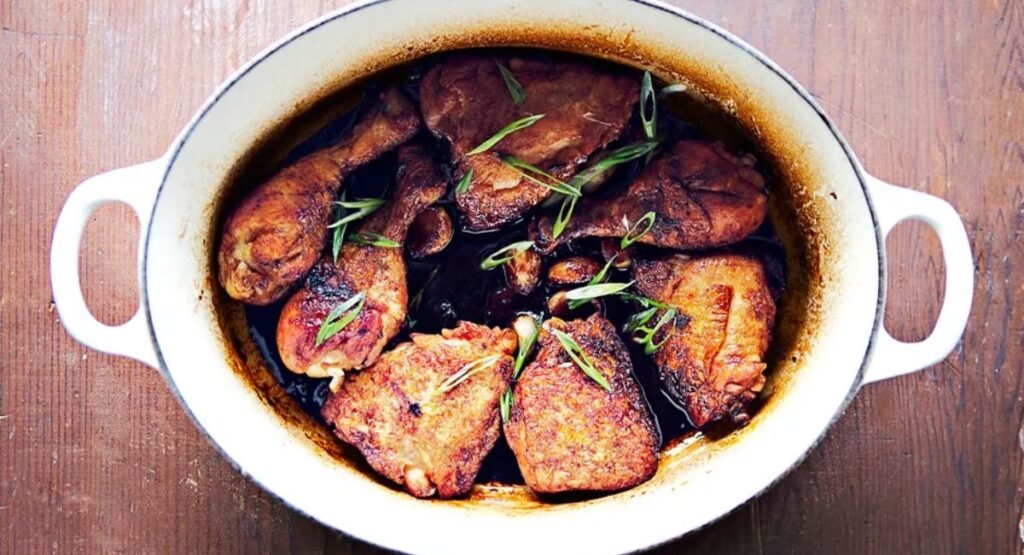
Even a simple chicken stock recipe can be taken to the next level with a few thoughtful touches. The first one is roasting your bones before simmering. Spread them on a baking sheet and roast at 400°F (200°C) for about 25 minutes until they’re golden brown. This caramelizes the natural sugars and proteins, adding a deep, almost nutty richness to your stock that you simply can’t get from raw bones alone.
Second tip: don’t add salt during cooking. Stock is an ingredient, not a final dish. You’ll season when you use it, so keeping the stock itself salt-free gives you full control over the flavor of whatever you’re making with it.
Third, add a small piece of kombu (dried seaweed) in the last 30 minutes of cooking. This is a Japanese technique that adds a natural umami depth it’s subtle, but it’s the kind of thing that makes people ask what your secret is.
Finally, save all your vegetable scraps throughout the week in a zip-lock bag in the freezer. Onion skins, carrot peels, celery leaves, parsley stems add them all to your next batch. It’s the most flavorful free ingredient you’ll ever find.
Quick Answer: What Is a Chicken Stock Recipe?
A chicken stock recipe is a slow-simmered liquid made from chicken bones, vegetables like onion, carrot, and celery, plus aromatics and water. It forms the flavorful base for soups, gravies, and sauces. A good homemade chicken stock takes 3 to 6 hours and results in a rich, golden, nutrient-dense liquid.
Creative Ways to Use Your Homemade Chicken Stock
Now that you have a gorgeous batch of the best chicken stock recipe you’ve ever made, the possibilities are wide open. Use it as the liquid base for any soup from a classic chicken noodle to a Thai coconut soup. Use it to cook rice or quinoa instead of plain water, and watch how much more flavorful your grains become.
One of the best uses is as a pan sauce. After searing chicken thighs or pork chops, deglaze the pan with a cup of stock and a knob of butter, scraping up all those brown bits. That simple sauce is better than anything you’d buy in a jar. You can also use it to braise vegetables, enrich a pasta sauce, or simply sip it warm like a tea especially comforting when you’re feeling under the weather.
Storing and Freezing Your Chicken Stock
Making a big batch is smart because good stock takes time, and having it ready in the freezer means you’re always prepared. Once your stock is strained and cooled, pour it into mason jars or airtight containers for the fridge (use within 5 days), or pour it into ice cube trays for the freezer. Once frozen, transfer the cubes to a zip-lock bag each cube is about 2 tablespoons, which is incredibly handy for adding small amounts to dishes on the fly.
For longer freezer storage in larger portions, freezer-safe zip-lock bags laid flat are your best bet. Label them with the date, and they’ll stay good for up to 6 months. Honestly, once you have a steady supply of homemade healthy chicken stock recipe cubes in your freezer, you’ll wonder how you ever cooked without them.
Frequently Asked Questions (FAQs)
Q: How long should I simmer a chicken stock recipe?
A: For a good homemade chicken stock, simmer for a minimum of 3 to 4 hours. For a richer, more gelatinous stock, 6 hours is ideal. Avoid boiling a gentle simmer gives the clearest, most flavorful result.
Q: Is homemade chicken stock healthier than store-bought?
A: Yes, significantly. A healthy chicken stock recipe made at home contains no added sodium, no preservatives, and naturally extracts minerals and collagen from the bones. Most commercial stocks are high in sodium and include artificial flavors to compensate for a shorter cooking process.
Q: Can I make chicken stock in a slow cooker or Instant Pot?
A: Absolutely. For a slow cooker, cook on low for 10 to 12 hours. For an Instant Pot, use the pressure cook setting for 2 hours with a natural release. The Instant Pot version is faster but may have a slightly different flavor profile than the stovetop method.
Q: What’s the difference between chicken stock and chicken broth?
A: Chicken broth is made primarily from meat, giving it a lighter flavor and thinner consistency. Chicken stock is made from bones (with or without meat), which releases collagen and creates a richer, fuller-bodied liquid that gels slightly when chilled.
Q: Can I reuse the bones for a second batch of stock?
A: You can, though the second batch will be noticeably lighter in flavor and nutrition since most of the collagen and minerals were extracted in the first simmer. Some cooks blend a small amount of fresh bones with used ones for a compromise. For the best chicken stock recipe, fresh bones will always deliver the deepest flavor.
Time to Get That Pot on the Stove
Here’s the honest truth: once you make your first batch of homemade chicken stock recipe, buying the carton stuff from the supermarket will feel like a step backwards. There’s a quiet satisfaction in turning something as humble as a chicken carcass and a handful of vegetable scraps into a deeply flavored, nourishing liquid that makes every single dish it touches taste better.
