
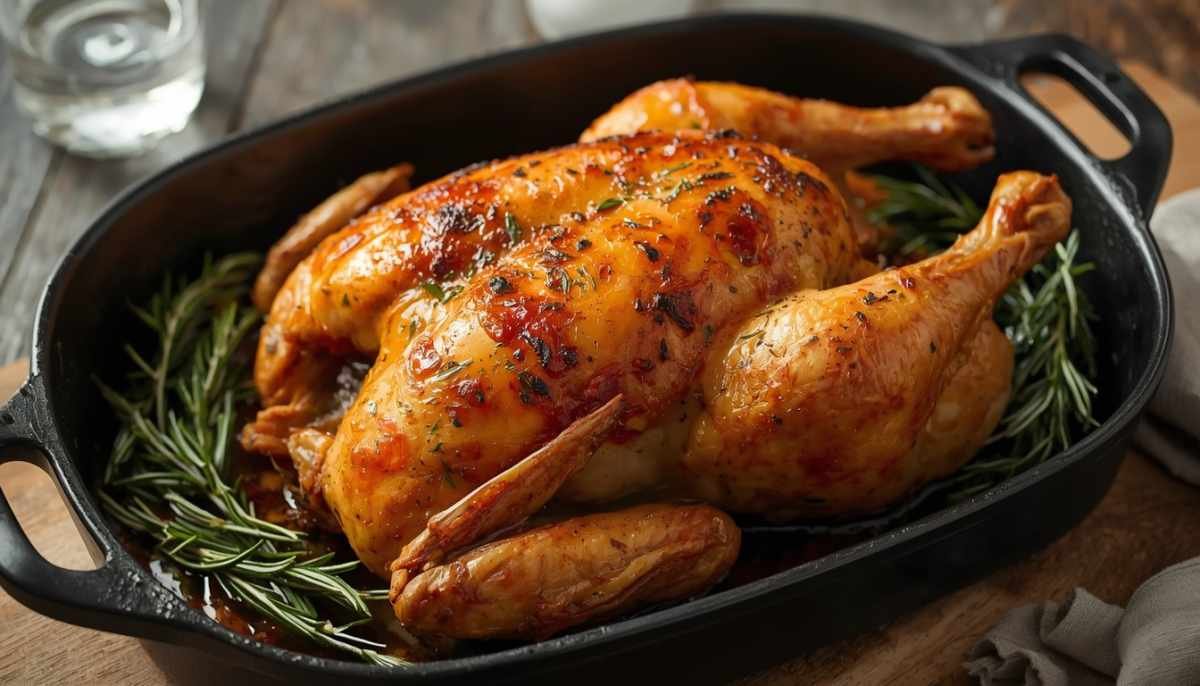
A perfectly roasted whole chicken sounds simple, but most home cooks end up with either dry meat or pale, soft skin that lacks any real texture. The difference between a good roast chicken and a great one comes down to three things: how you prepare the bird before it goes in the oven, the temperature you cook it at, and how long you let it rest afterward. This recipe explains not just what to do, but exactly why each step works so you can get consistent results every single time.
Why This Roasted Whole Chicken Recipe Actually Works
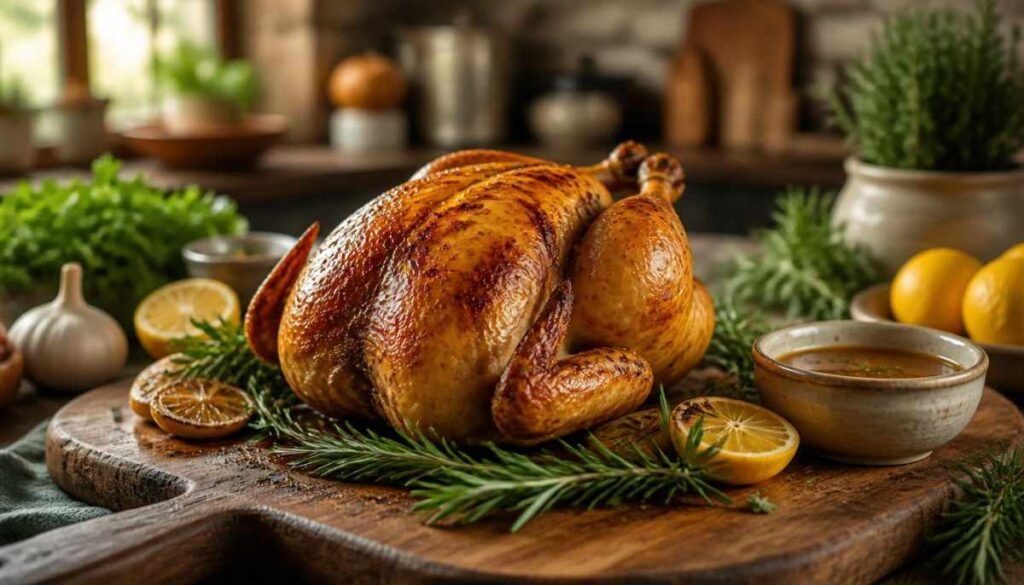
Most roast chicken recipes hand you a list of steps without explaining the logic behind them. When you understand why something works, you stop second-guessing it and start getting better results. Here is the science behind what makes this recipe reliable.
The Role of Dry Brining
Dry brining means salting the chicken and letting it rest uncovered in the fridge for several hours before cooking. When salt touches raw chicken skin, it draws out surface moisture initially. Then the salt dissolves into that moisture and gets reabsorbed back into the meat. This process seasons the chicken all the way through, not just on the surface.
The second benefit is skin texture. After the moisture gets pulled out and reabsorbed, the surface of the skin dries out significantly. Dry skin crisps up far better in a hot oven than wet skin does. This single step is responsible for most of the difference between a forgettable roast chicken and a memorable one.
Why Oven Temperature Matters
Starting the chicken at a high temperature, around 220 degrees Celsius, creates an immediate burst of surface heat that begins browning and crisping the skin. The Maillard reaction, which is the chemical process behind browning, requires high heat to activate properly. If you roast at a lower temperature throughout, the chicken cooks evenly but the skin stays pale and soft.
Some recipes call for starting high and then dropping the temperature partway through. This approach gives you the best of both outcomes: a well-browned exterior and evenly cooked, moist interior meat.
Ingredients You Need
| Ingredient | Amount | Why It Is Used |
| Whole chicken | 1.5 to 2 kg | Best size for even roasting at home |
| Unsalted butter | 3 tablespoons, softened | Goes under skin for moisture and browning |
| Kosher salt | 1.5 teaspoons | Dry brine for seasoning and skin texture |
| Black pepper | 1 teaspoon | Adds depth without overpowering |
| Garlic | 4 cloves | Two crushed inside cavity, two minced into butter |
| Fresh thyme | 4 to 5 sprigs | Aromatic flavour in cavity and butter |
| Lemon | 1, halved | Goes inside cavity to add moisture and brightness |
| Olive oil | 1 tablespoon | Mixed with butter for better heat distribution |
| Onion | 1, quartered | Goes in roasting pan as a natural rack base |
| Carrots | 2, roughly chopped | Roasting pan base, adds flavour to pan juices |
How to Prepare the Chicken Before Roasting
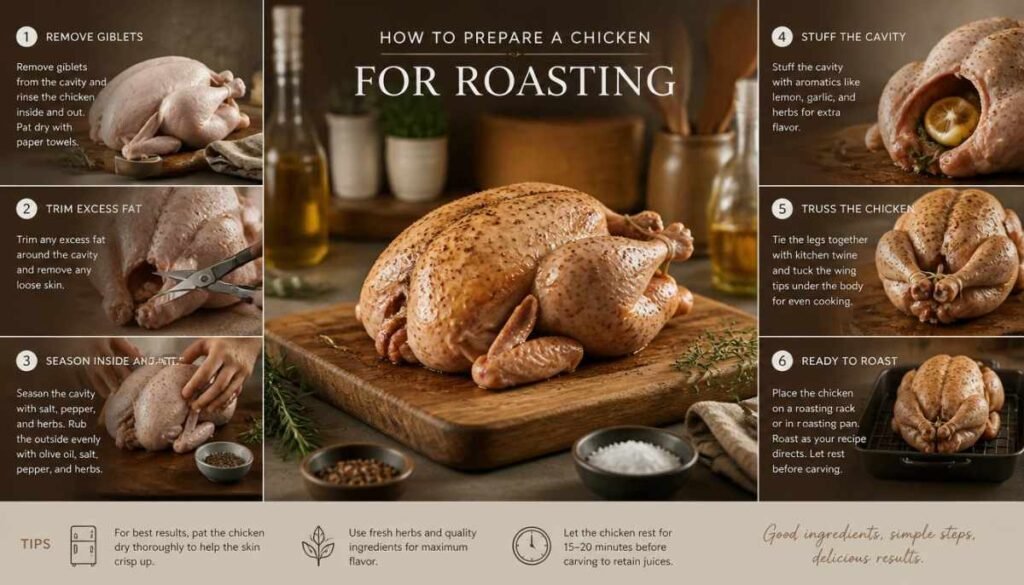
The oven does less than people think. What goes in is what comes out.
Should You Truss the Chicken?
Trussing means tying the legs together with kitchen twine so the bird holds a compact shape during roasting. It is optional but worthwhile. A trussed chicken roasts more evenly because the legs and breast cook at a similar rate. Without trussing, the legs often finish before the breast, which forces you to either pull the bird early or risk drying out the outer meat.
If you do not have kitchen twine, simply tuck the wing tips under the body and push the legs inward slightly. It is not as precise but it helps.
How Long to Rest Before Roasting
After seasoning the chicken, let it sit uncovered in the fridge for a minimum of one hour. Overnight is better. The goal is to let the surface dry out as much as possible. When you take it out of the fridge, allow it to sit at room temperature for 30 minutes before it goes into the oven. A cold bird placed directly into a hot oven takes longer to cook through and tends to cook unevenly.
Step by step prep:
- Remove giblets from the cavity and pat the entire chicken dry with paper towels.
- Mix softened butter with minced garlic, thyme leaves, salt, and pepper.
- Gently lift the skin over the breast and push half the butter mixture underneath, spreading it evenly.
- Rub the remaining butter mixture all over the outside of the chicken.
- Place lemon halves and garlic cloves inside the cavity along with thyme sprigs.
- Truss the legs or tuck them in tightly.
- Place on a rack over a roasting pan with onion and carrots underneath.
- Season the outside with a light pinch of extra salt and pepper.
- Rest uncovered in the fridge for at least one hour or overnight.
What to Serve With Roasted Whole Chicken

Roasted whole chicken pairs well with sides that can absorb the pan juices or complement the rich flavour of the meat. Roasted vegetables, mashed potatoes, or a simple green salad work well. For weeknight dinners with less preparation time, you can also plan a full meal around the chicken with minimal extra cooking.
If you are looking for complete meal ideas that come together quickly alongside a main protein, our Easy One Pan Dinner Ideas guide has practical options that work well on the same night.
One of the best things about roasting a whole chicken is what you can do with the leftover carcass. The bones, skin, and any remaining meat make an excellent base for homemade stock. Our Simple Chicken Stock Recipe walks you through how to turn those leftovers into a rich, flavourful stock that you can use all week.
How Long to Roast a Whole Chicken
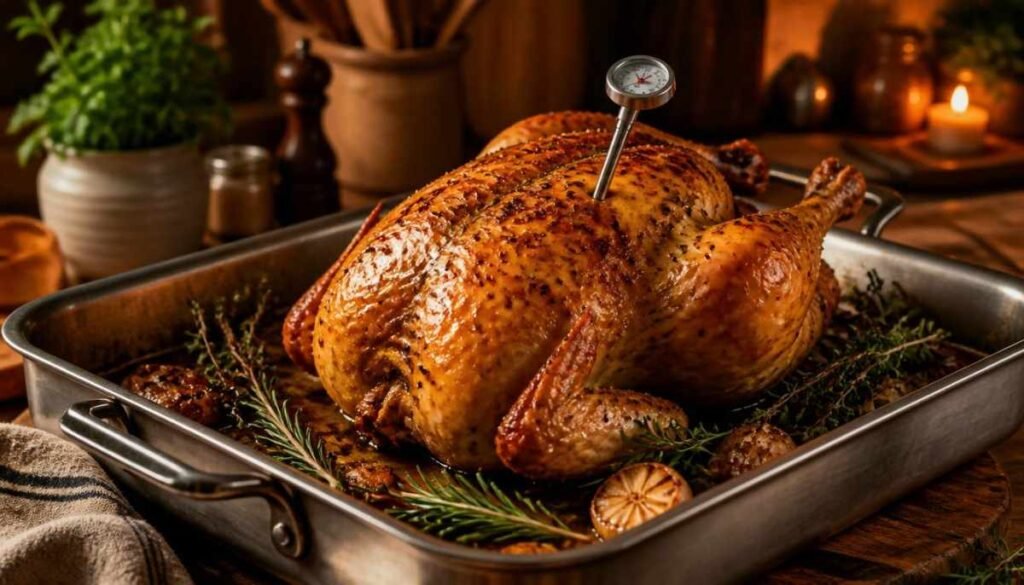
Cooking time depends on the weight of the bird. Use this as your guide, but always verify with a meat thermometer rather than relying on time alone.
| Chicken Weight | Initial High Heat (220C) | Reduced Heat (180C) | Total Estimated Time |
| 1.2 to 1.5 kg | 20 minutes | 40 to 50 minutes | 60 to 70 minutes |
| 1.5 to 1.8 kg | 20 minutes | 50 to 60 minutes | 70 to 80 minutes |
| 1.8 to 2.2 kg | 20 minutes | 60 to 70 minutes | 80 to 90 minutes |
| 2.2 kg and above | 20 minutes | 70 to 80 minutes | 90 to 100 minutes |
These are estimates based on a standard home oven. Every oven runs slightly differently, so start checking internal temperature about 10 minutes before the estimated time ends.
How to Get Crispy Skin on Roasted Chicken
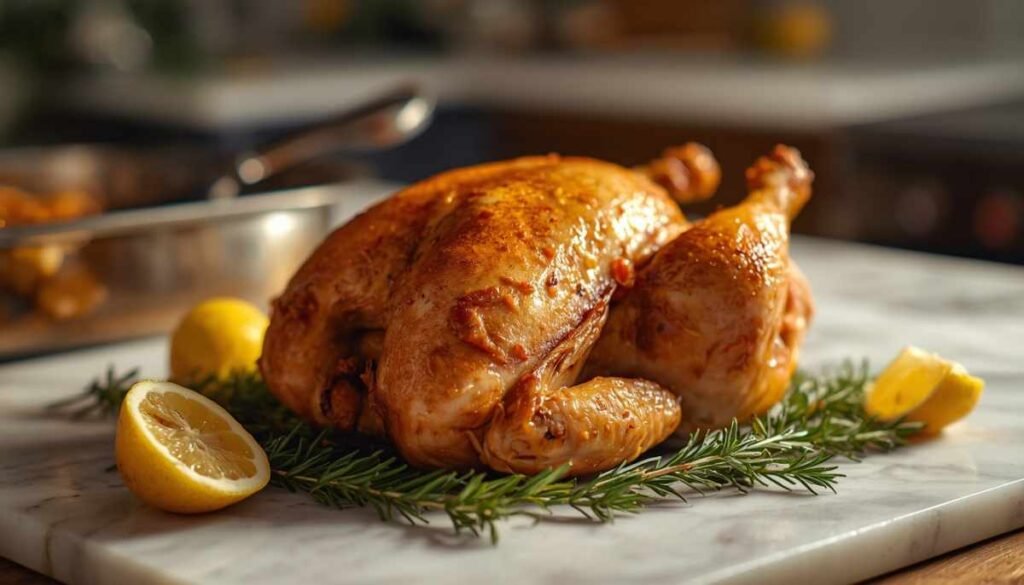
Crispy skin is the most talked about part of a roast chicken and the most commonly missed. Here is what actually makes it happen.
Start With Completely Dry Skin
Water is the enemy of crispiness. Before the chicken goes into the oven, the skin must be as dry as possible. Pat it dry again right before roasting even if you already did it during prep. Any surface moisture will steam the skin rather than crisp it.
The High Heat Start
Place the chicken in a preheated oven at 220 degrees Celsius for the first 20 minutes. Do not open the oven door during this phase. This is when the skin gets its initial browning and starts crisping. After 20 minutes, reduce the heat to 180 degrees Celsius for the remainder of the cook time.
Baste Only Once or Twice
Some recipes call for basting every 20 minutes. This actually works against crispy skin because opening the oven drops the temperature and the liquid you pour over the chicken adds surface moisture. If you want to baste, do it once at the midpoint and leave it after that.
How to Know When Roasted Chicken Is Done
Time is a guide but internal temperature is the only reliable measure of doneness.
| Location on Chicken | Safe Internal Temperature |
| Thickest part of the thigh (not touching bone) | 74 degrees Celsius (165F) |
| Thickest part of the breast | 74 degrees Celsius (165F) |
| Where thigh meets body | 74 degrees Celsius (165F) |
Insert a meat thermometer into the thickest part of the thigh without touching the bone. Bone conducts heat and gives a falsely high reading. If the thigh reads 74 degrees Celsius and the juices run clear when pierced, the chicken is done.
After pulling it from the oven, rest the chicken uncovered for 10 to 15 minutes before carving. Resting allows the juices to redistribute throughout the meat. Carving immediately causes those juices to pour out onto the board instead of staying in the meat where they belong.
FAQ: How to Roast a Whole Chicken
What temperature should I roast a whole chicken at?
Start roasting at 220°C for 20 minutes to help crisp the skin, then lower the temperature to 180°C for the remaining cooking time. This method helps achieve crispy skin and juicy meat.
How long does it take to roast a whole chicken?
A 1.5 kg chicken usually takes about 70–80 minutes. A larger chicken around 2 kg may take 80–90 minutes. Always check doneness using a meat thermometer.
What is the safe internal temperature for roasted chicken?
The chicken is fully cooked when the thickest part of the thigh reaches 74°C. This ensures it is safe to eat and properly cooked inside.
Should I cover the chicken while roasting?
No, roasting should be done uncovered to keep the skin crispy. Covering it traps steam, which makes the skin soft. You can loosely cover only the breast with foil if it browns too quickly.
Do I need to baste the chicken while roasting?
Basting is optional. It is not necessary if you already use butter or seasoning under the skin. If you do baste, do it only once or twice so the oven temperature stays stable.
Why is my roasted chicken skin not crispy?
Soft skin usually happens due to moisture on the chicken before cooking. Always pat the chicken dry before roasting. Also avoid low temperature and frequent oven opening.
How long should roasted chicken rest before carving?
Let the chicken rest for 10–15 minutes after cooking. This helps the juices settle back into the meat, making it more tender and juicy.
Can I roast a chicken without a roasting rack?
Yes, you can. Simply place chopped vegetables like onion, carrot, and celery under the chicken. They lift it slightly and allow even air circulation during roasting.
