
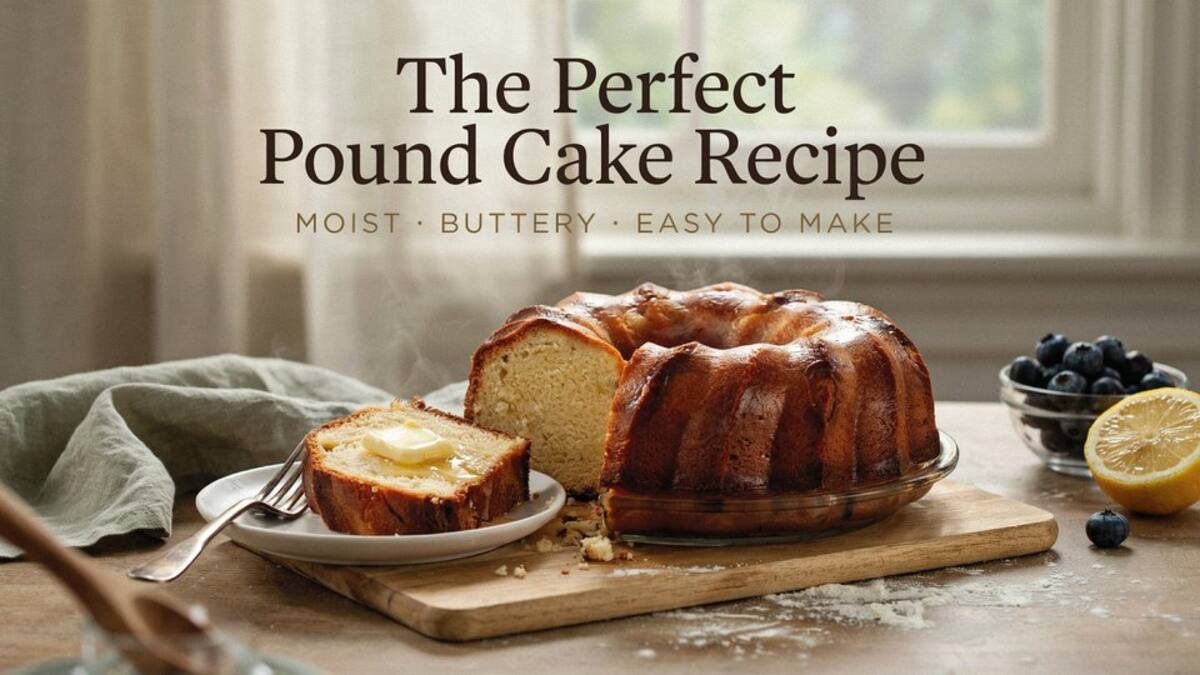
There is something magical about a pound cake. It is simple, golden, and buttery yet it never goes out of style. Whether you serve it plain, with fresh fruit, or a drizzle of glaze, every single slice feels like home.
This recipe is not just another pound cake guide. We will tell you what to do AND why it works. That is what makes this recipe foolproof.
What Is a Pound Cake?
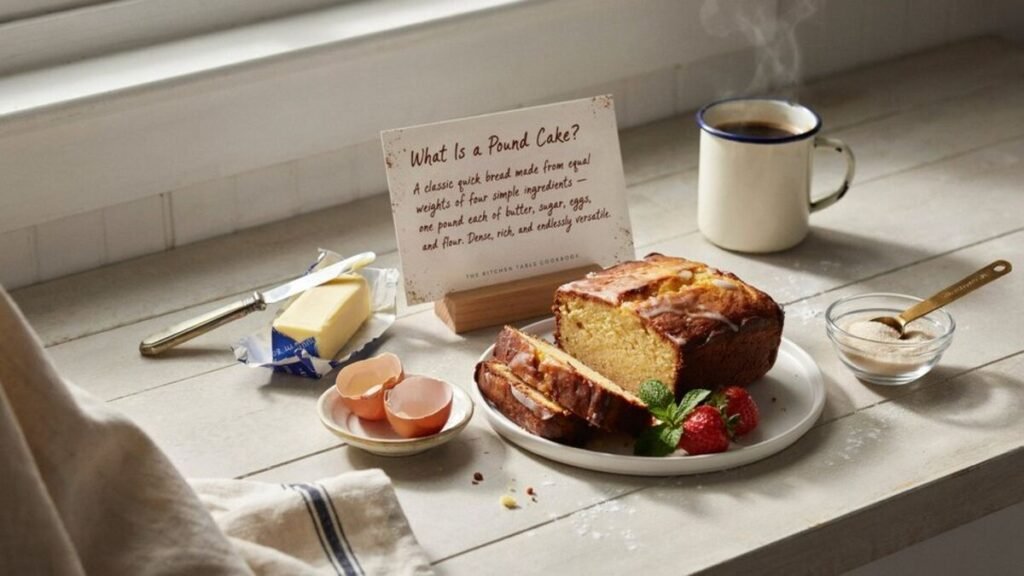
Pound cake is one of the oldest cake recipes in the world. Its name comes from the original recipe: one pound each of butter, sugar, eggs, and flour. That is it. No baking powder. No milk. Just four simple ingredients in equal amounts.
Over time, bakers started making small changes. They added vanilla extract for flavor. They added a little baking powder for lift. They adjusted the ratios to make the cake lighter and more moist.
But the heart of the recipe stayed the same rich butter, sweet sugar, and a dense, velvety crumb that melts in your mouth.
Want to understand more about how flour behaves in baking? Read this guide from King Arthur Baking one of the most trusted names in baking science.
Ingredients You Need
Here is everything you need to make one perfect pound cake. These amounts are for a standard 9×5 loaf pan.
- 1 cup unsalted butter (226 g), at room temperature
- 2 cups (400g) granulated white sugar
- 4 large eggs room temperature
- 3 cups (360g) all-purpose flour
- 1 cup (240 ml) whole milk, brought to room temperature.
- 2 teaspoons pure vanilla extract
- ½ teaspoon baking powder
- ½ teaspoon salt
Why Room Temperature Butter Matters
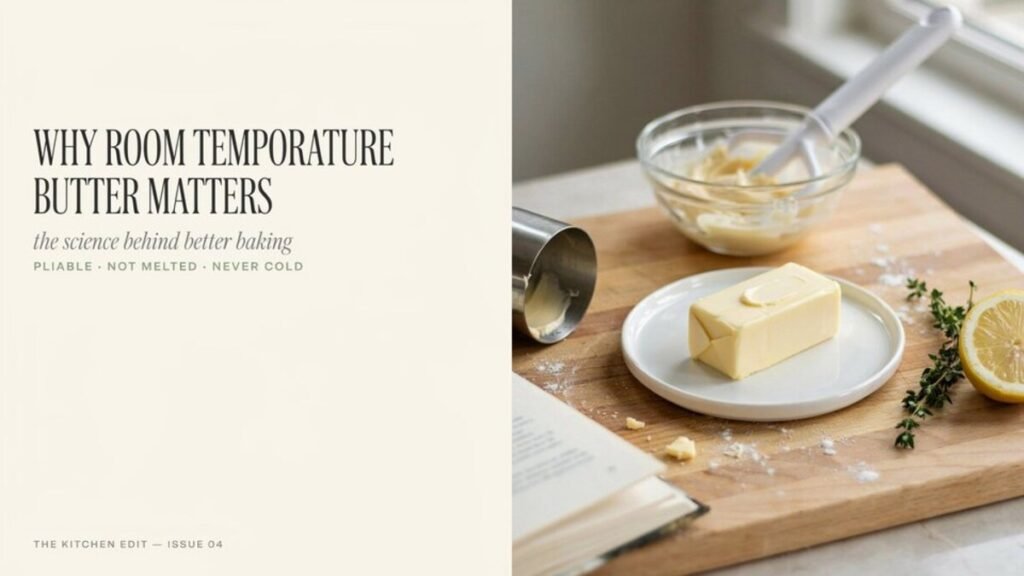
This is the most important step that most people skip. Cold butter does not cream properly with sugar. When butter is at room temperature, it traps tiny air bubbles as you beat it with sugar. Those air bubbles are what give your cake a light, soft texture.
If your butter is cold, your cake will come out heavy and dense. Leave your butter on the counter for at least 1 hour before you start baking.
Can You Use Salted Butter?

Yes, you can but reduce the added salt to just a pinch. Salted butter has different salt levels across different brands, so using unsalted butter gives you full control over the flavor. Unsalted is always the safer, more consistent choice.
How to Make Pound Cake Step by Step
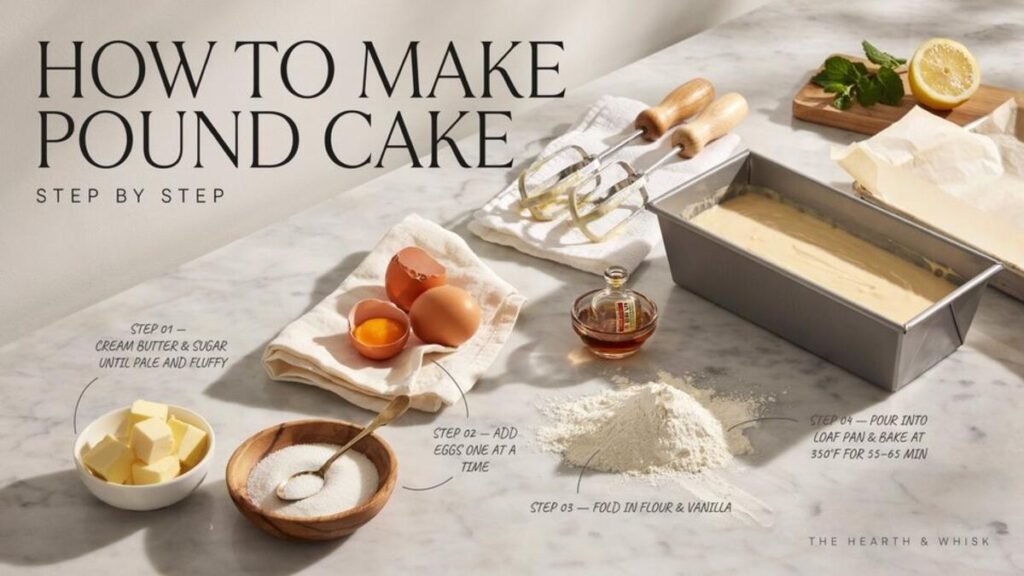
Follow these steps exactly and your pound cake will turn out perfect every single time.
Step 1: Prep Your Pan
Preheat the oven to 325°F (165°C). Generously coat a 9×5-inch loaf pan with butter, then sprinkle in a light layer of flour. Gently tap out any excess flour to create an even coating. This simple step helps the cake release easily after baking and promotes a beautifully golden exterior.
Do not use cooking spray alone it does not coat as well as butter and flour together.
Step 2 Cream Butter and Sugar
Place your room temperature butter in a large bowl. Beat it with an electric mixer on medium speed for 2 minutes until it looks smooth and creamy. Then slowly add the sugar and beat for another 4 to 5 minutes.
Do not rush this step. The mixture should look pale, fluffy, and almost white when it is done. This creaming process is what builds the structure of your entire cake.
Step 3 Add Eggs One at a Time
Add your eggs one at a time. Beat well after each egg before adding the next one. This step is critical. Adding all eggs at once can cause the batter to curdle and separate.
Each egg needs to be fully incorporated before the next one goes in. This keeps your batter smooth, stable, and silky.
Step 4 Mix in Flour and Milk
In a separate bowl, whisk together your flour, baking powder, and salt. Now alternate adding the flour mixture and milk into your butter mixture — start with flour, then milk, then flour again. Always start and end with flour.
Mix on low speed only until the ingredients are just combined. Avoid overmixing, as it can develop excess gluten and result in a dense, chewy cake instead of a tender crumb. Add the vanilla extract and gently mix until evenly incorporated.
Step 5: Bake and Cool
Transfer the batter to the prepared loaf pan and spread the top evenly with a spatula. Bake at 325°F (165°C) for 60 to 75 minutes, or until the cake is fully baked through.
Begin checking for doneness after 60 minutes by inserting a toothpick into the center of the loaf. If it comes out clean or with a few dry crumbs attached, the cake is ready. If wet batter remains, continue baking for a few more minutes and test again.
Remove the cake from the oven and allow it to rest in the pan for about 15 minutes. Carefully transfer it to a wire rack and let it cool completely before slicing. For the best texture and clean slices, wait at least 1 hour before serving.
Common Mistakes to Avoid
This is the section most recipe websites skip. These mistakes are why pound cakes fail and now you know exactly what to watch out for.
Using cold ingredients. Cold butter, cold eggs, and cold milk do not mix together properly. They cause the batter to look curdled and lumpy. Always bring everything to room temperature first.
Over-mixing the batter. After adding the flour, mix only until the ingredients are combined. Excessive mixing can develop too much gluten, resulting in a cake that is heavy and firm rather than light, tender, and buttery.
Opening the oven too early. Do not open the oven door in the first 45 minutes of baking. Cold air rushes in and causes the cake to sink in the middle. Wait until at least the 60-minute mark before checking.
Wrong oven temperature. Pound cake bakes low and slow at 325°F. If your oven runs hot, the outside will burn before the inside is cooked. Use an oven thermometer to check your actual temperature.
Not cooling long enough. Cutting a warm pound cake squashes the crumb. Always wait at least 1 full hour after taking it out of the oven before slicing.
For a deeper understanding of baking science and why these mistakes happen, check out this excellent breakdown from Serious Eats.
Tips for the Best Results
These small details make a big difference between a good pound cake and a truly great one.
How to Know When It Is Done
The toothpick test is one of the easiest ways to check if your pound cake is done. Insert a toothpick into the center of the cake, making sure it reaches the thickest part. If it comes out clean without any wet batter, the cake is ready. You can also lightly press the top with your fingertip. A properly baked cake will spring back gently, while a dent that stays in place means it needs more baking time.
Another helpful clue is the cake’s appearance around the edges. When fully baked, a pound cake will begin to pull away slightly from the sides of the pan, showing that the structure has set and the cake is ready to come out of the oven.
How to Store Pound Cake
Pound cake stores very well, which is one of the reasons bakers have loved it for centuries.
- Room temperature: Wrap tightly in plastic wrap or store in an airtight container. Stays fresh for up to 3 days.
- Refrigerator: Wrapped properly, it lasts up to 7 days. Bring to room temperature before serving for the best texture.
- Freezer: Slice the cake, wrap each slice individually in plastic wrap, then place in a zip-lock bag. Freezes perfectly for up to 3 months.
For safe food storage guidelines, the FDA food safety resource is an excellent reference.
Variations You Can Try
Once you master the classic recipe, these variations are easy and delicious.
Lemon Pound Cake. Add 2 tablespoons of fresh lemon zest to the batter and replace the vanilla with lemon extract. Drizzle a simple lemon glaze on top made from powdered sugar and fresh lemon juice.
Cream Cheese Pound Cake. Replace half the butter with full-fat cream cheese. This makes the cake incredibly moist, slightly tangy, and even more rich and dense than the classic version.
Chocolate Pound Cake. Replace ½ cup of flour with ½ cup of unsweetened cocoa powder. Add an extra ¼ cup of sugar to balance the bitterness of the cocoa.
Final Thoughts
Pound cake proves that great baking does not have to be complicated. With just a handful of everyday ingredients and a little patience, you can create a dessert that has stood the test of time. There is no need for elaborate decorations or advanced techniques. The magic comes from simple ingredients working together perfectly.
What makes pound cake so special is its balance. It is rich without being overpowering, dense without feeling heavy, and satisfying with every bite. Its buttery flavor and tender texture make it a timeless favorite that never goes out of style.
Once you try this recipe, you will see why pound cake has remained beloved for generations. Whether served on its own or paired with fresh fruit and whipped cream, it delivers comfort and classic flavor in every slice.
Now it is your turn to bake. Gather your ingredients, follow the steps, and enjoy the rewarding experience of making a perfect homemade pound cake.
Frequently Asked Questions
Why did my pound cake sink in the middle?
A sunken center is usually caused by removing the cake from the oven before it is fully baked. If the middle has not set properly, it can collapse as the cake cools. Opening the oven door too early may also cause a sudden drop in temperature, which can affect the cake’s structure. For best results, avoid checking the cake until it has baked for at least 60 minutes.
Can I freeze pound cake?
Yes, pound cake freezes very well. For easy storage, cut the cake into slices and wrap each piece individually in plastic wrap. Place the wrapped slices in a freezer-safe bag or container and freeze for up to three months. When ready to enjoy, let the slices thaw at room temperature for about an hour.
How long does pound cake stay fresh?
Pound cake can be stored at room temperature for up to three days when kept in an airtight container. If refrigerated, it will stay fresh for about a week. For longer storage, freeze it for up to three months without losing much of its flavor or texture.
